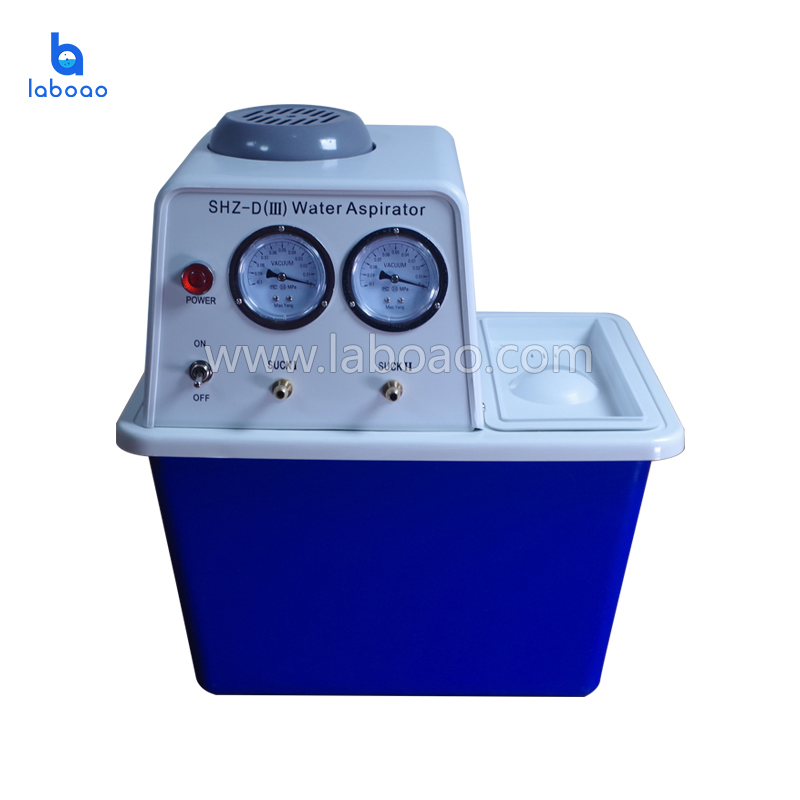
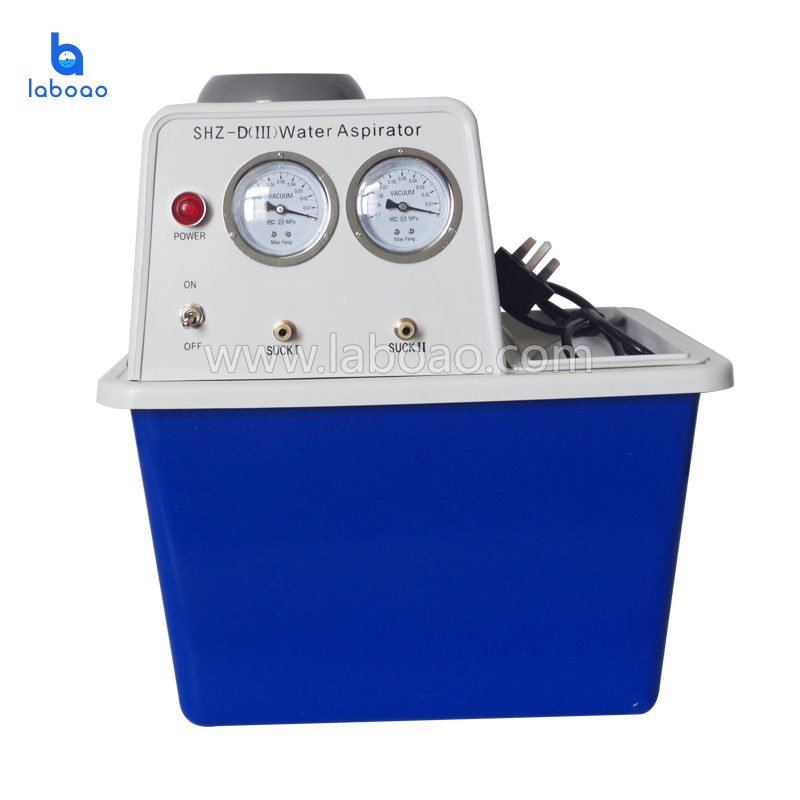
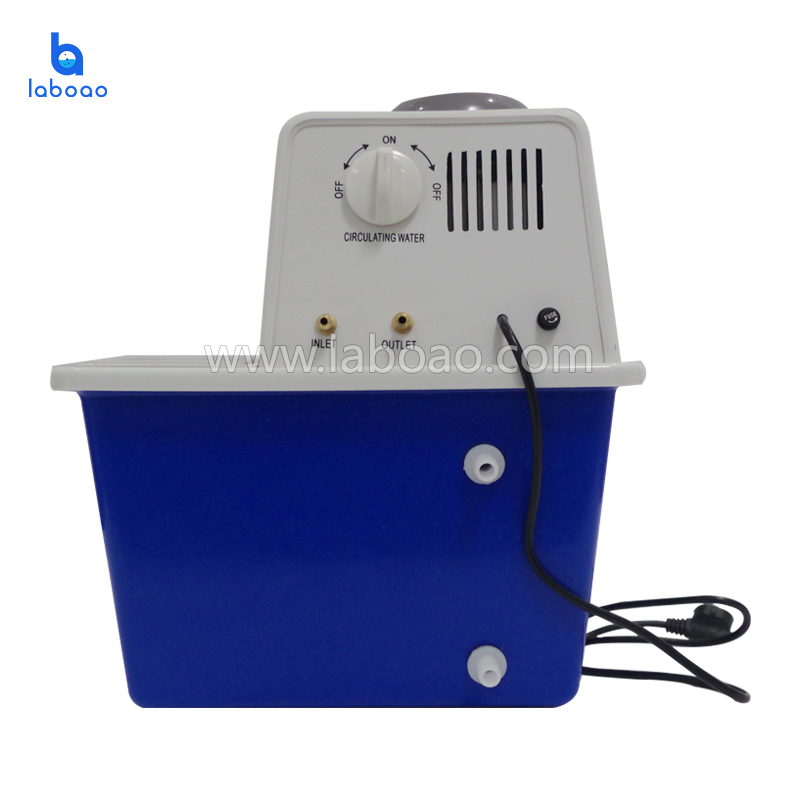
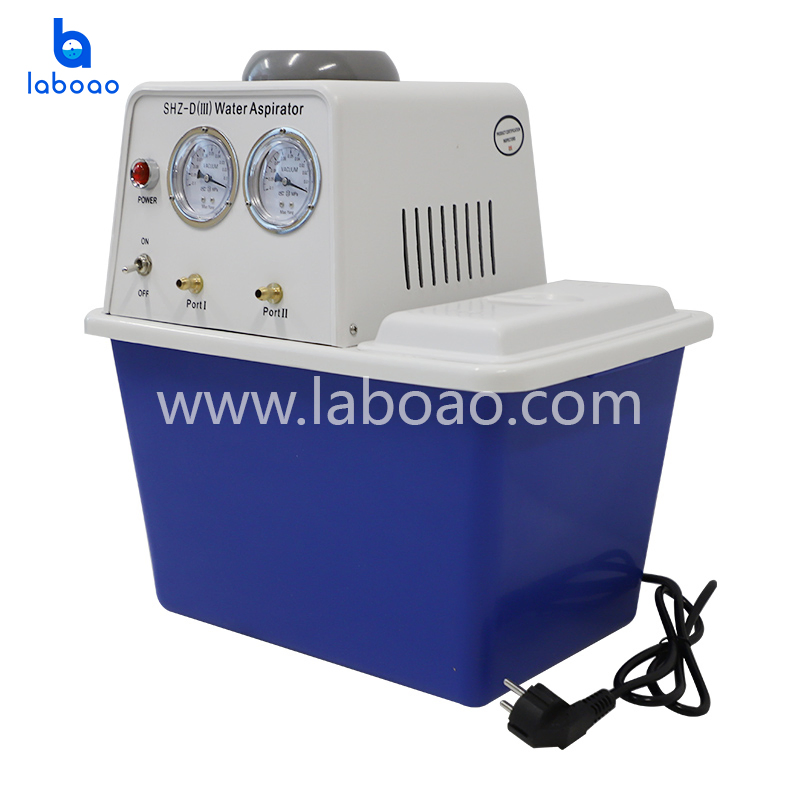
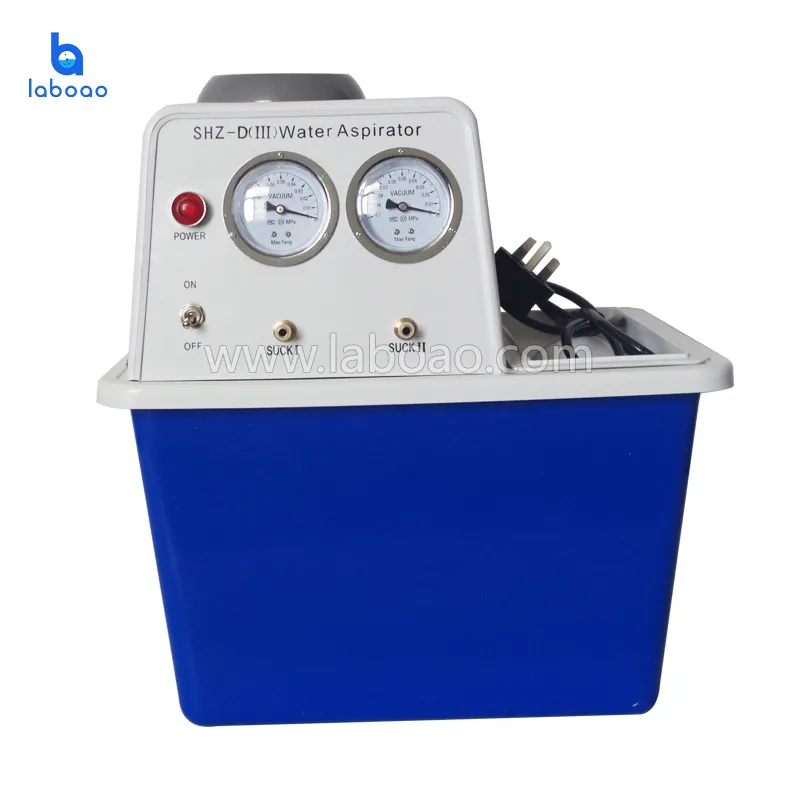
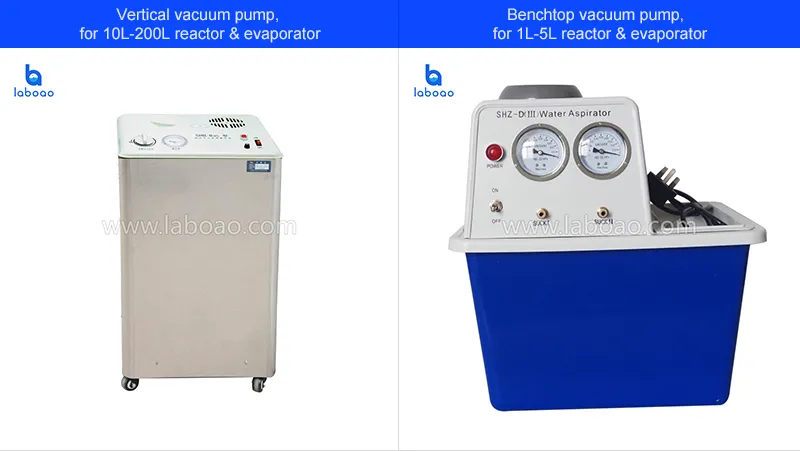
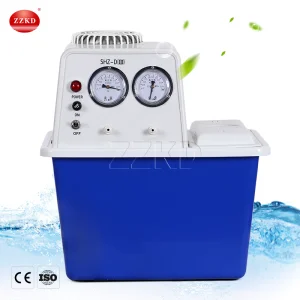
Laboratory small water liquid ring vacuum pump for mini rotary evaporator
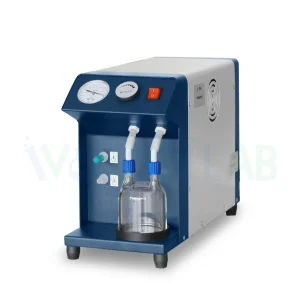
The series of Multi-purpose Circulating Water Vacuum Pump takes circulating water as working fluid, uses the negative pressure created by fluid jet to eject. It provides vacuum conditions for processes such as evaporation, distillation, crystallization, drying, sublimation, filtration, decompression, and degassing. It is particularly suitable for laboratories and small-scale tests in universities, chemical industries, biochemistry, and foodstuff engineering.
- Cyclically use water, saving precious water resources.
- Save more than 35% of electricity compared to other vacuum pump types.
- Specialized fluid muffler reduces gas in water for higher and more stable vacuum degrees.
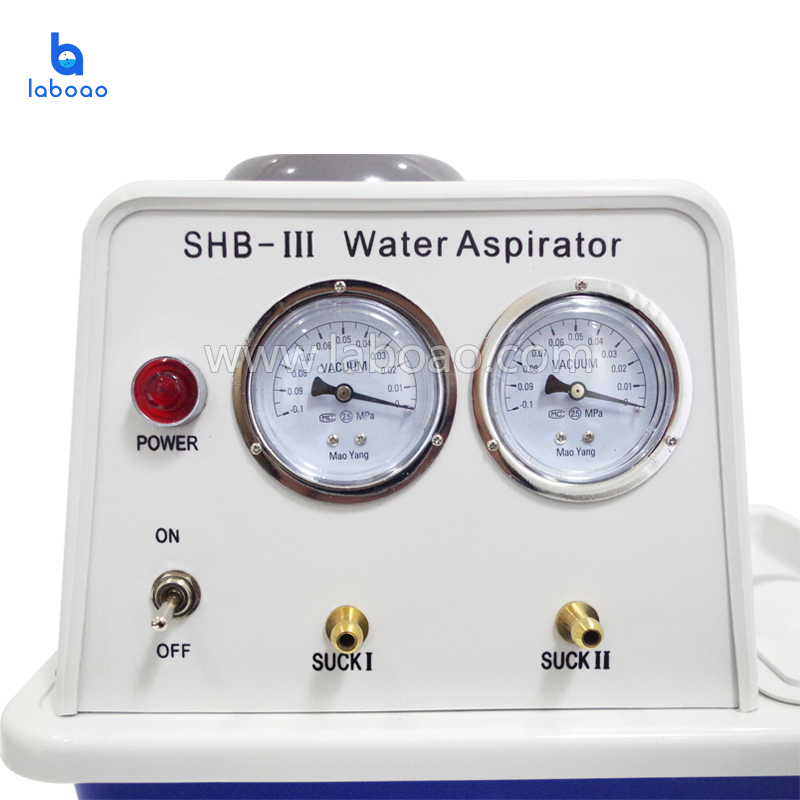
- Double-tap and double-display design can be used independently or in parallel.
- High resistance to corrosion by acids, alkalis, and solvents.
- Equipped with fluorine rubber sealing to prevent corrosive gas intrusion.
- SHB-3 series features various material options (PP, Stainless Steel, Lucid flume) to meet specific acid resistance and observation needs.
| Parameter |
Specifications (Model SHZ-D) |
| Flow | 20L/min |
| Lift head | 8m |
| Volume | 15L |
| Number of taps | 2 |
| Sucking volume | 10L/min |
| Vacuum | 0.098Mpa |
| Power | 180W |
| Voltage | 220V |
| Material | Anticorrosion |
| Size | 400*280*420mm |
| Weight | 15kg |
Frequently Asked Questions (FAQ)
Q1: What are the primary applications for this vacuum pump?
A: It is designed for evaporation, distillation, crystallization, drying, filtration, and degassing, making it ideal for laboratories and small-scale industrial tests.
Q2: How does the circulating water system benefit the user?
A: The system recycles water to conserve resources and uses a fluid muffler to ensure a higher, more stable vacuum degree with reduced noise.
Q3: Is the pump resistant to chemical corrosion?
A: Yes, it is built to resist corrosion from acids, alkalis, and various solvents. Specific models use PP or stainless steel for enhanced protection.
Q4: Can I operate two different experiments simultaneously with one pump?
A: Yes, the double-tap and double-display design allow for two processes to be connected and monitored independently or in parallel.
Q5: What maintenance is required for the SHZ-D model?
A: You should regularly replace the water in the flume to ensure water quality, maintain the vacuum level, and prevent dirt buildup.
Q6: What makes the motor sealing special?
A: The pump uses fluorine rubber sealing which prevents corrosive gases from entering and damaging the internal electric components.
 Tongyi Machinery