Direct-from-manufacturer premium pumping solutions with globally recognized certifications.
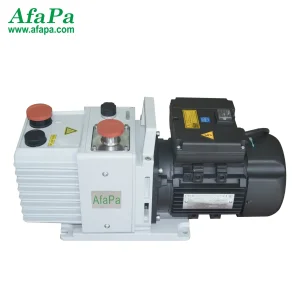
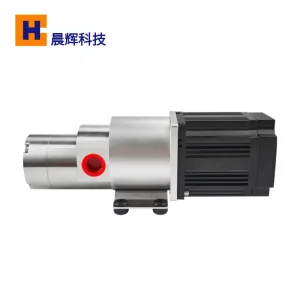
How high-vacuum architectures drive efficiency, throughput, and system reliability in advanced manufacturing.
The contemporary industrial landscape demands processes operating at increasingly lower absolute pressures with larger volumetric flow rates. A vacuum booster pump—specifically of the Roots rotary lobe configuration—is a critical element in achieving these parameters. In industrial applications, vacuum boosters act as force multipliers, operating in series with backing pumps (such as liquid ring, rotary vane, or dry screw pumps) to extend the ultimate vacuum limits and significantly accelerate system pump-down cycles.
Globally, the integration of CE-certified vacuum booster pumps is expanding. Regions executing sophisticated chemical syntheses, semiconductor wafer fabrication, lithium-ion battery drying, and aerospace simulations require vacuum setups that guarantee no reverse migration of lubricants and absolute process integrity. By providing high pumping speeds under low inlet pressures (ranging from 10-1 to 10-4 mbar), these systems ensure massive energy savings compared to single-stage units running at overloaded power brackets.
A booster pump utilizes non-contacting, counter-rotating lobes designed with minimal internal clearances. This allows high rotational speeds (up to 3600 RPM) without wear inside the pumping chamber, maximizing volumetric displacement. For enterprise buyers, this means minimizing mechanical downtime and ensuring prolonged system lifetime in corrosive environments.
Rigorous European safety compliance dictates thermal sensors, bypass valves, and spark-free designs, essential for volatile petrochemical processes.
Boosters reduce industrial chamber evacuation times by 50% to 70%, yielding direct throughput increases for load-lock chambers.
Dry pumping chambers prevent system contamination, ensuring high-purity chemical reactions and spotless metal coating deposition.
Harnessing advanced Chinese manufacturing ecosystems for global infrastructure deployment.
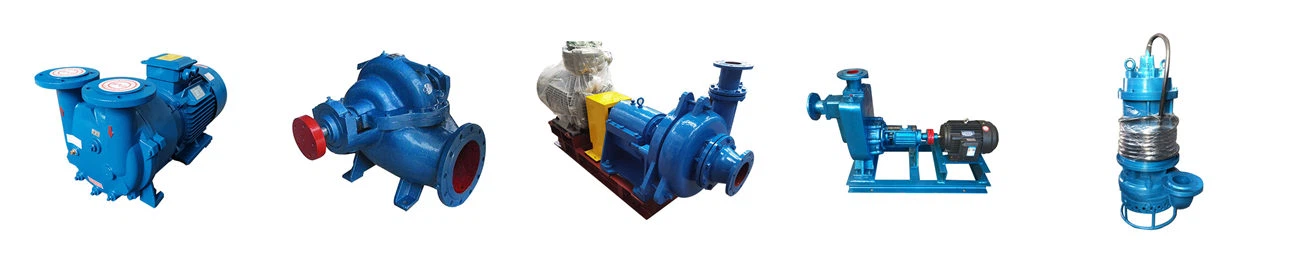
Shandong Tongyi Machinery Equipment Co.,Ltd stands as a benchmark manufacturer of vacuum pumps, water pumps, slurry pumps, and bespoke industrial pump packages. Guided by our foundational ethos of "science and technology leading, quality oriented, and reputation first", the enterprise systematically pioneers high-efficiency fluid mechanics and gas compression systems. Our continuous research and development cycles yield high-performance vacuum hardware tailored for heavy-duty operational environments.
Our modern standard workshop houses a rigorous, scientific quality management system. Equipped with state-of-the-art CNC lathes, precision boring machines, automated machining centers, and large-scale floor boring mills, we control dimensional tolerances with extreme accuracy. This ensures that every Roots vacuum unit and water ring pump maintains maximum dynamic balancing and optimal clearances.
Chinese industrial manufacturing has shifted from high-volume assembly to advanced precision engineering. For global enterprises looking for a vacuum booster pump manufacturer, our facility provides clear economic and technological advantages:
Years of Engineering Expertise
CE Certified Operations
Precision Machining Centers
Countries Exported To
Examining how vacuum booster pumps solve specific engineering challenges in diverse fields.
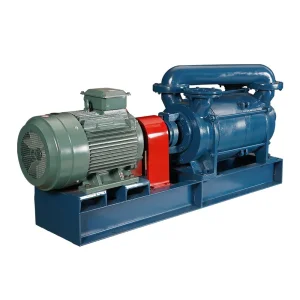
In refining operations, oil gas recovery systems require stable deep vacuum under varying flow conditions. Integrating a vacuum booster with backing systems like the 2BEA or 2BEC water ring vacuum pumps handles volatile organic compounds (VOCs) safely, preventing explosive conditions while optimizing condensate recovery.
Process plants utilizing vacuum distillation, sublimation, or freeze drying rely on roots vacuum units configured with vertical oil-free reciprocating pumps (WLW series). This combination guarantees that process vapors do not contact lubricating oil, protecting chemical purity and preventing solvent contamination.
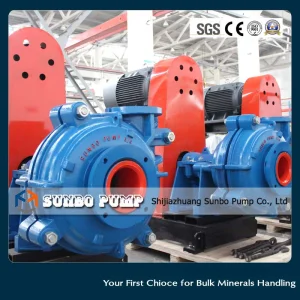
Vacuum induction melting, degassing, and ore refining processes generate massive particulate loads. Our robust vacuum systems, backed by horizontal centrifugal slurry pumps (GMZ/ZJ series) for waste handling, ensure stable operations even under harsh particulate environments.
| Application Area | Recommended Booster Configuration | Backing Pump Integration | Key Performance Parameter |
|---|---|---|---|
| Petrochemical Condensation | Roots Booster (Ex-Proof) | 2BEA / SK Water Ring Pump | High tolerance to condensable vapors |
| Pharmaceutical Crystallization | Dry Rotary Lobe Booster | WLW Oil-Free Reciprocating | Zero dynamic contamination of solvents |
| Transformer Oil Degassing | High Vacuum Roots Booster | 2Stage Rotary Vane / Scroll | Ultimate vacuum pressure < 10-3 mbar |
| Industrial Food Packaging | Compact Roots Booster | 0.55kw / 16m3/H Rotary Vane | Fast pump-down, high duty cycle |
The next generation of industrial vacuum technology focuses on energy efficiency and digital integration.
Industrial manufacturing accounts for a significant portion of global electrical consumption. Modern plant operators no longer look only at purchase cost; they analyze Total Cost of Ownership (TCO). High-efficiency vacuum booster pumps reduce the load on primary backing pumps, saving up to 40% on energy costs by running smaller motor sizes for the same volumetric displacement.
Advanced vacuum booster pumps are now deployed with vibration sensors, exhaust temperature probes, and seal pressure monitoring systems. These sensors stream real-time data to centralized control networks, enabling predictive maintenance. This prevents unexpected rotor contacts and costly production line stoppages.
As chemical plants handle increasingly aggressive compounds, manufacturers are moving towards advanced surface treatments. Implementing PTFE coatings, nickel-plating, or utilizing solid stainless steel rotors (such as those used in custom 2SK series) prevents corrosion from acid gases, prolonging the lifespan of the vacuum booster.
Eliminating shaft seals through magnetic couplings is a growing trend. Because there is no physical contact between the driving motor shaft and the rotor shaft, there is zero risk of atmospheric air leaking into the high-vacuum chamber, which is critical for semiconductor and hydrogen processes.
A comprehensive guide for procurement officers to verify vendor capability and technical specs.
Verify that your manufacturer provides authentic CE Declarations of Conformity that list the relevant machinery and electrical safety directives. Additionally, check for ISO 9001:2015 registration of the assembly floor.
Always request pumping speed vs. inlet pressure curves. Ensure the booster's compression ratio is optimized with your specific backing pump to prevent thermal overload at higher pressures.
Reliable operations require rapid availability of consumable components, including dynamic seals, bearings, and synthetic lubricants. Ensure your supplier offers structured repair manuals and direct engineering support.
Answers to critical design, operations, and application questions for process engineers.
A vacuum booster pump is designed with close internal clearances and operates without internal compression. If started at atmospheric pressure, the high gas density creates excessive heat and mechanical resistance, which would overload the motor and cause rotor seizure. Therefore, they must only be activated once a backing pump has evacuated the system to the cut-in pressure (typically between 10 and 50 mbar).
CE Certification guarantees compliance with relevant European safety standards. This includes the Machinery Directive (2006/42/EC) for design safety, the Low Voltage Directive (2014/35/EU) for electrical components, and the Electromagnetic Compatibility (EMC) Directive (2014/30/EU). This certification is required for importing and operating vacuum systems in European markets.
A bypass (or overflow) valve connects the outlet side of the booster back to the inlet. If the pressure differential between the inlet and outlet becomes too high, the valve opens, allowing gas to recirculate. This prevents the booster from overheating and overloading the motor, allowing it to start alongside the backing pump right from atmospheric pressure, which simplifies the control system and protects the equipment.
Yes. Water ring vacuum pumps (like our SK, 2BV, or 2BEA series) make excellent backing pumps, especially when handling processes with high moisture content, condensable vapors, or corrosive gases. The liquid ring design acts as a flame barrier and absorbs heat, which cools the hot discharge gases from the vacuum booster.
Complementary industrial pumping solutions for processing, extraction, and fluid management.
 Tongyi Machinery