In modern chemical manufacturing, refining, and industrial processing, the transfer of volatile, corrosive, hazardous, and high-viscosity media represents a critical operational vector. Chemical transfer pumps are not merely auxiliary machinery; they are the heart of fluid management systems that govern plant safety, thermal efficiency, and overall yield optimization. Globally, process plants operate under stringent environmental mandates, such as the EU's REACH regulation and the US EPA's Clean Air Act, which enforce zero-emission thresholds for volatile organic compounds (VOCs). Consequently, the design, engineering, and manufacturing standards of chemical pumps have migrated toward high-integrity metallurgy, magnetic drive configurations, and precision-machined mechanical seal chambers.
The shift from traditional localized manufacturing to dynamic global sourcing has established China as the primary hub for chemical pump production. Chinese manufacturers, heavily supported by massive metallurgical clusters and integrated supply chains, now construct advanced pumping units conforming directly to global metrics, including ISO 2858, ASME B73.1, and API 610/685 standards. This white paper analyzes the industrial dynamics, technical parameters, and economic drivers that define China's leading chemical pump factories, focusing on the engineering frameworks applied by industry leaders such as Shandong Tongyi Machinery Equipment Co., Ltd.
The selection of materials for chemical transfer pumps dictates their operational life cycle and safety index. Unlike clean water transfer, chemical media exhibit distinct fluid profiles characterized by acidity, oxidization, temperature variations, and suspended particulates. China's top manufacturers use advanced computational fluid dynamics (CFD) to design impeller geometry that mitigates local pressure drops, reducing the risk of cavitation.
For aggressively corrosive acids (such as sulfuric, hydrochloric, hydrofluoric, and nitric acids), metallic alloys often fall short or become cost-prohibitive. Top Chinese factories utilize fluoroplastic centrifugal pumps (FSB series) lined with Fluorinated Ethylene Propylene (FEP) or Perfluoroalkoxy (PFA). The lining process involves high-pressure injection molding onto a cast iron structural matrix, ensuring that the structural strength of metal is paired with the chemical inertness of fluoroplastics.
When handling high-temperature organic solvents or high-pressure hydrocarbons, stainless steels (ASTM 316, 316L, Duplex SS, and Super Duplex) are essential. Factories utilize sophisticated spectrometer testing to verify alloy compositions, preventing carbide precipitation during casting and welding processes. This ensures the pump housings can withstand severe chemical stress corrosion cracking (SCC) and localized pitting.
| Pump Class / Type | Common Materials | Max Temp Range | Optimal Medium / Applications |
|---|---|---|---|
| FSB Fluoroplastic Centrifugal | FEP, PFA, PVDF Linings | -20°C to +150°C | Concentrated HCl, H2SO4, Strong Oxidizers, Plating Baths |
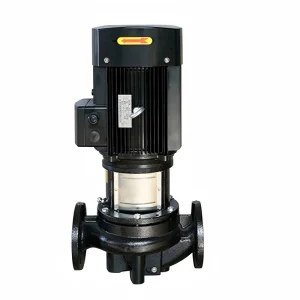
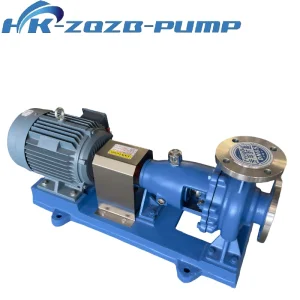
| IH Series Chemical Centrifugal | SS316, SS316L, Hastelloy | -20°C to +240°C | Organic Solvents, Alkaline Solutions, Mild Hydrocarbons |
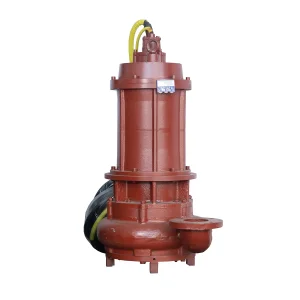
| YZ / YW Slurry Series | High-Chrome Alloy, Wear-resistant Elastomers | Up to 120°C | Slurry transport, Acidic wastewater, Mine tailings |
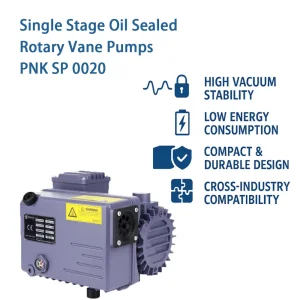
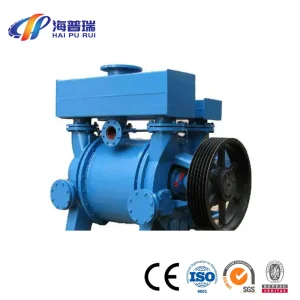
| 2BV / 2BE Water Ring Vacuum | Cast Iron, SS304, SS316L | Up to 80°C (gas inlet) | Gas extraction, vacuum distillation, chemical degassing |
The global competitiveness of Chinese chemical transfer pump manufacturers rests on four critical pillars: integrated supply chains, advanced CNC machining centers, raw material scale, and continuous engineering specialization. Unlike fragmented production setups where castings, machining, dynamic balancing, and assembly occur in separate regions, Chinese industrial zones concentrate these processes.
Based in the heart of Shandong’s manufacturing hub, Shandong Tongyi Machinery Equipment Co., Ltd. stands as a professional, R&D-driven manufacturer specializing in industrial vacuum systems, chemical transfer centrifugal pumps, and slurry handling units. Grounded in the corporate philosophy of "science and technology leading, quality oriented, and reputation first," the enterprise integrates advanced engineering design with automated manufacturing.
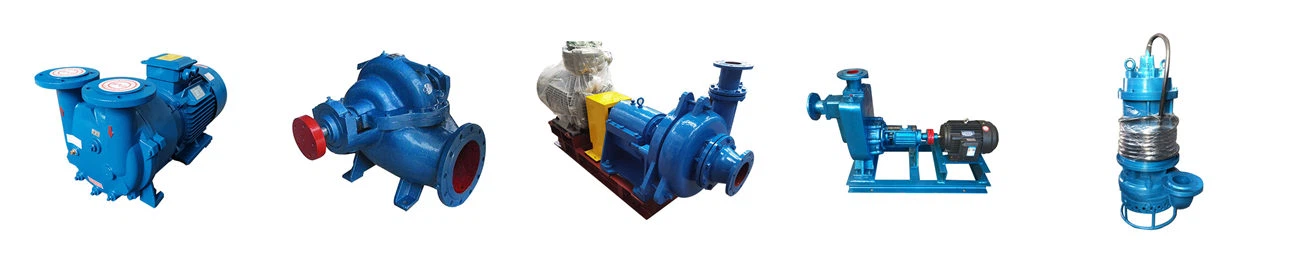
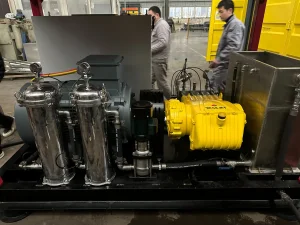
The factory features a modern standard workshop equipped with advanced machining tools, including CNC lathes, heavy floor boring machines, and dedicated hydraulic test stations. By maintaining strict control over the metallurgical processing and structural alignment of their pump housings, Shandong Tongyi ensures that their product lines—ranging from the high-temperature IH Chemical Centrifugal Pump to the robust SK/2BV series water ring vacuum units—maintain continuous operational cycles under demanding process parameters.
Industrial pump implementation depends highly on the local process layout. Selecting the wrong pump configurations results in cavitation, premature seal degradation, or motor overload.
Requires high-temperature resistance, flame-proof drive assemblies, and double mechanical seals to handle volatile hydrocarbons and sour water. Pumps must follow strict ISO 2858 or API 610 frameworks to prevent vapor locking.
Transporting abrasive, acidic tailings requires pumps built with high-chrome wet-end components or specialized rubber linings. Our YZ/YW and GMZ/ZJ series slurry pumps handle abrasive solid-liquid mixtures without rapid casing washouts.
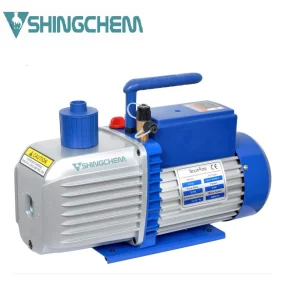
Widely utilized in pharmaceutical synthesis and vacuum food packaging. Water ring vacuum pumps (such as SZ, SK, and 2BV series) pull stable, high-vacuum ranges, removing condensable gases and vapors without contaminate carryover.
The industrial pump sector is evolving through the incorporation of smart technologies and energy-saving designs. For global procurement teams, seeking out manufacturers that actively integrate these technologies is essential for long-term operational efficiency:
To minimize procurement risk, global buyers must utilize structured validation criteria when auditing Chinese chemical transfer pump factories. Relying solely on catalog specifications is insufficient.
Shandong Tongyi Machinery Equipment Co.,Ltd is a professional manufacturer of vacuum pumps, water pumps, slurry pumps, and other industrial pumps. In line with the concept of "science and technology leading, quality oriented, and reputation first", the company has made great efforts to innovate and forge ahead, so that excellent results have been achieved in the production and operation, new product development, and other aspects of the company.
Shandong Tongyi Machinery Equipment Co., Ltd is a professional manufacturer of vacuum pump, water pump, slurry pump and other industrial pumps. In line with the concept of "science and technology leading, quality oriented, and reputation first", the company has made great efforts to innovate and forge ahead, so that excellent results have been achieved in the production and operation, new product development and other aspects of the company.
The company has modern standard workshop, with a complete scientific quality management system. There are many advanced, professional production equipment and testing instruments.
Main products are SZ, SZB, SK, 2BV, 2BEA, 2BEC series water ring vacuum pump, roots water ring vacuum unit, closed cycling vacuum unit, WLW vertical oil-free reciprocating vacuum pump, etc. SH, S, OS, IS, ISG, LG, DL, DA1 series water pump, YZ, YW series vertical slurry pump, GMZ, ZJ series horizontal slurry pump, QW series submersible sewage pump, DYWS series submerged pump, WSL series submerged No-clog pump, PW series horizontal sludge pump, IH series chemical pump, YHF series submerged anti-corrosive pump, FSB series fluorine plastic centrifugal pump, and at the same time also produces self -priming pump, automatic water supply equipment.
Products are widely used in petroleum, chemical industry, electronics, mining, metallurgy, plastic-machinery, dye chemical, brick machinery, low-temperature equipment, paper making machinery, medicine chemical, food machinery and other fields.
CNC lathes, drilling machines, machining centers, large floor boring machines and other advanced processing equipment.
The company has a perfect pre-sales service reception, sales production supervision and management, after-sales service guidance and other perfect service system.
Cavitation occurs when the local static pressure of a liquid drops below its vapor pressure, causing vapor bubbles to form and violently collapse, which damages the impeller. To prevent this in high-temperature systems:
Mechanical seals utilize dynamic contact faces (such as carbon, silicon carbide, or ceramic) that require a fluid barrier film. While cost-effective, they are subject to wear and can leak under harsh chemical conditions.
Sealless magnetic drives eliminate dynamic seals entirely. The motor rotates an outer magnet carrier that drives an inner magnet rotor inside a sealed containment shell. This completely prevents fluid leaks, making magnetic drives the preferred solution for toxic, flammable, or volatile chemicals.
High fluid viscosity increases drag within the pump casing, reducing the flow capacity, reducing the discharge head, and significantly increasing the required shaft power.
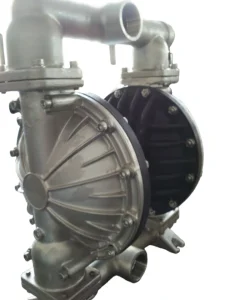
For fluids with viscosities above 100 cSt, standard centrifugal pumps require performance derating according to Hydraulic Institute (HI) standards. In cases of extremely high viscosity, positive displacement pumps (such as gear pumps or diaphragm slurry pumps) are more efficient than centrifugal pumps.
Every pump manufactured by Shandong Tongyi undergoes strict quality control steps:
Standard closed-impeller centrifugal pumps (such as the IH series) are designed for clean liquids; solids can clog the impeller vanes and accelerate wear on the mechanical seals.
For fluids containing solid particulates or abrasive slurries, specialized designs are required. Open or semi-open impellers, such as those in the YZ or ZJ horizontal slurry series, utilize wear-resistant materials and hardened seals to handle abrasive solids without clogging.
 Tongyi Machinery