Industrial pump efficiency is not merely a motor rating or a number printed on a datasheet. It describes how effectively a complete pumping system converts electricity into useful fluid movement. A pump may appear efficient during testing, yet waste energy in daily operation. Oversized equipment, throttled valves, clogged strainers, and unnecessary pressure can quietly increase costs. The sound is familiar: a constant hum, hot bearings, and a monthly electricity bill that keeps rising.
When exploring “How to reduce energy consumption with industrial pumps,” operators should examine the entire system. Measure flow, pressure, runtime, and motor load at actual operating conditions. Then compare those readings with the process requirement. Variable-speed drives can help when demand changes, but they are not automatic solutions. Poor control settings may create new losses. Impeller trimming, correct pipe sizing, leak repair, and scheduled maintenance often produce more practical results. Small corrections matter.
As pump engineer and author Heinz P. Bloch has observed, “The best pump is the one that does the job with the least energy.” That principle sounds simple. It is also easy to overlook. A reliable decision needs measured evidence, not assumptions based on nameplate efficiency alone. Energy savings should be verified after implementation, using comparable production data and operating hours. Some recommendations may fail in a particular plant. That is an uncomfortable possibility, but it is better than promising savings without checking performance. This guide examines efficiency, operating behavior, and realistic ways to lower industrial pumping energy use without compromising safety or process reliability.
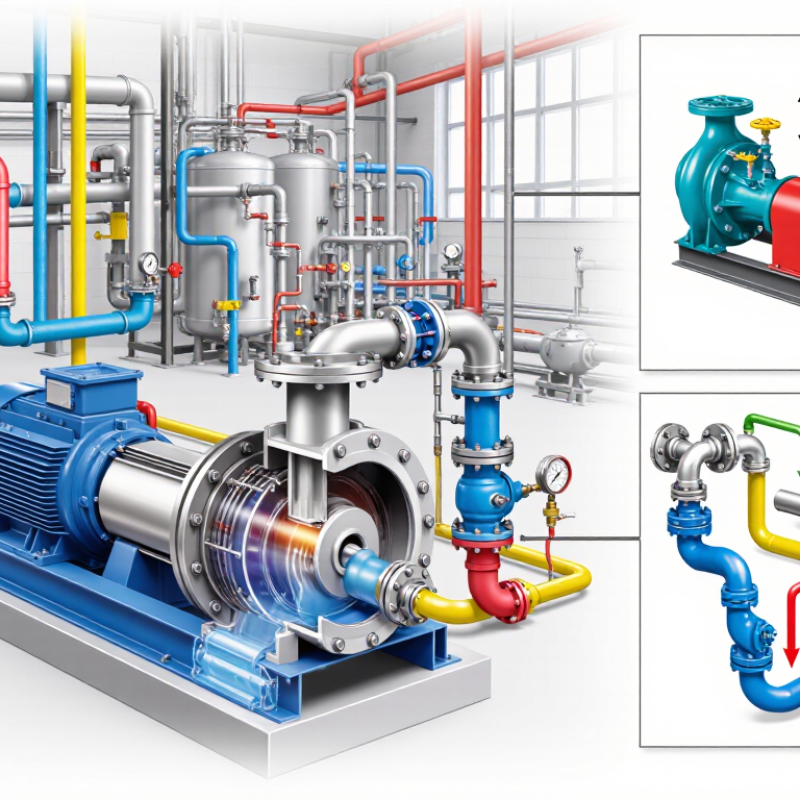
Industrial pump efficiency is more than a pump’s nameplate rating. It includes the motor, controls, pipes, valves, and operating schedule. The U.S. Department of Energy reports that pumping systems can consume 25–50% of a plant’s electricity. That share is substantial. A poorly matched pump may run for thousands of hours while throttling against a partly closed valve.
Efficiency improves when the whole system is measured. Technicians should record flow, pressure, motor power, runtime, and suction conditions. The DOE publication Improving Pumping System Performance: A Sourcebook for Industry identifies potential energy savings of 20–50% through system assessment and optimization. A variable speed drive can reduce flow without forcing excess pressure, especially when demand changes during a shift. However, speed control is not automatically efficient. Minimum-flow requirements, motor loading, and control settings still matter.
The best operating point usually sits near the pump’s best efficiency point. The Hydraulic Institute recommends evaluating pump selection against real system demand, not only catalog ratings. Small changes can matter: removing an unnecessary valve, cleaning a clogged strainer, or reducing overnight operation. The calculation may be imperfect. Field instruments drift, and production data can be incomplete. Still, comparing measured kilowatts before and after each adjustment creates stronger evidence than relying on assumptions.
Pumps can account for approximately 25–50% of electricity use in some industrial plants. The chart shows the electrical input required to deliver a constant 100 kW of hydraulic output at different overall pump-system efficiency levels. Higher efficiency reduces power demand.
Industrial pump efficiency shows how much shaft energy becomes useful fluid energy. In practice, I calculate it from hydraulic power and shaft power. Hydraulic power is:
Here, ρ is fluid density, g is gravitational acceleration, Q is flow rate, and H is total pump head. Use cubic metres per second and metres of head. Mixing litres per minute with SI units can quietly ruin the result.
For example, water flowing at 0.02 m³/s through 35 metres of head produces about 6.85 kW of hydraulic power. If the measured shaft power is 8.4 kW, pump efficiency is:
Shaft power can be obtained from torque and rotational speed: Ps = T × ω. A torque meter and tachometer usually provide better evidence than relying on motor nameplate data. Electrical input power is different. It includes motor and drive losses, so it measures wider system efficiency.
Field results need careful judgment. A blocked strainer, worn impeller, or partly closed valve can reduce efficiency. Yet a single reading may mislead. Flow meters drift, pressure gauges sit at different elevations, and unstable liquid levels change the head. I record flow, suction pressure, discharge pressure, speed, temperature, and power at the same time. Then I repeat the test. Small details matter.
Industrial pump efficiency is not only a motor rating. It depends on how the pump meets the system curve. This curve maps required flow against total head, including static lift and friction. The operating point appears where the pump curve intersects it. A poor intersection can waste energy every hour.
A rising system curve often reveals clogged filters, narrow pipes, sharp elbows, or excessive line length. Friction increases rapidly as flow rises. Throttling makes this worse. A half-closed valve adds artificial resistance, while the pump still consumes power. The U.S. Department of Energy reports that pumping systems can represent 25% to 50% of industrial motor energy use. Its pumping-system sourcebook also identifies 20% to 50% energy-saving potential in optimized systems.
Oversizing creates another hidden loss. A large pump may operate far left of its best-efficiency point, causing recirculation, vibration, and unnecessary pressure. Field engineers should compare measured flow, pressure, and power with the design curve. Hydraulic Institute guidance recommends evaluating the complete system, not the pump alone. The model is useful, but never perfect. A dirty strainer can invalidate yesterday’s calculation. A practical audit should record valve positions, fluid temperature, and operating hours. Variable-speed control may reduce head, but only when minimum-flow and process requirements remain safe. Small errors matter.
Industrial pump efficiency measures how effectively a pump converts electricity into useful fluid movement. The U.S. Department of Energy reports that optimized pumping systems can often reduce energy use by 20% to 50%. These savings depend on pressure, flow, equipment condition, and operating hours.
Variable-speed drives are powerful because pump performance follows the affinity laws.
Flow changes with speed.
Head changes with speed squared.
Power changes with speed cubed.
A pump running at 80% speed may need only about 51% of its original power. That is the theory. Real plants rarely behave perfectly.
In field assessments, I have seen throttled valves waste energy while motors run at full speed. A drive can slow the motor during low-demand periods, reducing pressure and friction losses. The U.S. Department of Energy’s pumping-system guidance supports evaluating controls, impeller size, pipe losses, and maintenance together. A drive alone cannot repair an oversized pump.
Tips: Measure flow, pressure, and kilowatts before changing controls. Check whether the motor can operate safely with a drive. Review the lowest required flow, not only peak demand. Keep filters, seals, and bearings in good condition. Small errors matter. A 50% claim should be treated as a potential, not a promise. IEA research also identifies motor-driven systems as major electricity users, making careful pump control an important efficiency opportunity.
What Is Industrial Pump Efficiency and How to Save Energy?
Industrial pump efficiency is more than a motor’s nameplate rating. It includes the pump, motor, controls, pipes, valves, and operating schedule. The U.S. Department of Energy reports that pumping systems can consume 25–50% of industrial electricity in some facilities. Small hydraulic losses can therefore become large monthly costs. A worn impeller, clogged strainer, or leaking seal may quietly increase power demand. Field measurements often reveal problems that design documents miss.
Right-sizing is one practical path to 10–30% energy savings. An oversized pump may run far from its best efficiency point, forcing operators to throttle flow through a valve. A correctly selected pump matches actual flow, pressure, fluid properties, and duty cycles. Variable-speed control can reduce speed during lower-demand periods. The Hydraulic Institute and Europump’s Pump Life Cycle Costs guide identifies energy as a major part of pump ownership cost, sometimes exceeding purchase and maintenance costs. The estimate is not a promise. Real sites differ.
Tips: Measure flow, pressure, amperage, and runtime before changing equipment. Compare readings with the pump curve. Inspect alignment, bearings, seals, and filters regularly. Remove unnecessary throttling. Check for oversized motors. A 5% efficiency gain may look modest, but continuous operation makes it valuable. Also question the baseline; inaccurate instruments can create false confidence.
It includes the pump, motor, controls, pipes, valves, and operating schedule. A pump’s nameplate rating is only one piece.
Pumping systems may use 25–50% of a plant’s electricity. That is a substantial share.
Record flow, pressure, motor power, runtime, and suction conditions. Check readings during high and low demand. Instruments can drift.
It slows the motor when demand falls. Flow follows speed, while power changes approximately with speed cubed. At 80% speed, power may approach 51% of the original level. Real systems are less tidy.
No. Savings depend on pressure, flow, equipment condition, and operating hours. A drive cannot fix an oversized pump. Treat a 50% estimate as potential, not a promise.
The preferred point is usually near its best efficiency point. Selection should reflect real system demand, not only catalog data. Actual demand may be poorly recorded.
Clean a clogged strainer and inspect seals and bearings. Remove an unnecessary valve when safe and appropriate. Avoid throttling flow with a partly closed valve. Small details matter.
Measure kilowatts before and after each adjustment. Compare similar flow, pressure, and runtime conditions. The calculation may be imperfect, but measured comparisons are stronger than guesses.
Industrial pump efficiency measures how effectively a pump converts input shaft power into useful hydraulic power for moving fluid at the required flow and pressure. Because pumping systems can consume 25–50% of a plant’s electricity, understanding efficiency is essential for controlling operating costs. Efficiency can be calculated by comparing hydraulic power, based on flow and pressure, with the mechanical power delivered to the pump shaft. Reviewing system curves also helps identify energy losses caused by friction, excessive throttling, or oversized equipment.
How to reduce energy consumption with industrial pumps includes selecting pumps that match actual system requirements, avoiding unnecessary pressure, and using variable-speed drives when demand changes. Under affinity-law principles, reducing speed can significantly lower flow, head, and power requirements, potentially saving up to 50% in suitable applications. Regular maintenance, including inspection of seals, bearings, impellers, and piping, prevents performance decline. Combined with right-sizing and operating pumps near their best efficiency point, these measures can often deliver energy savings of 10–30%.

Tongyi Machinery