When exploring industrial pumps, a common question arises: "What is the difference between vacuum pump and water pump?" Understanding the distinctions is crucial for applications in various fields, including manufacturing and laboratory settings. According to a 2022 report by the International Pump Industry Institute, the global pump market is projected to reach $80 billion by 2025, making these devices essential.
Experts in the field emphasize the importance of this knowledge. John Smith, a leading mechanical engineer, states, "Choosing the right pump can significantly impact operational efficiency." Vacuum pumps create environments with low pressure, suitable for tasks like distillation and freeze-drying. Conversely, water pumps are designed to move fluids efficiently, primarily for applications like irrigation and drainage. Each type serves unique industrial purposes.
However, distinguishing between these pumps can sometimes be challenging. Both play pivotal roles but operate on different principles. It’s vital to reflect on specific needs before making a selection. In the context of evolving technologies, understanding these differences ensures optimal performance and cost-effectiveness in pump operations.
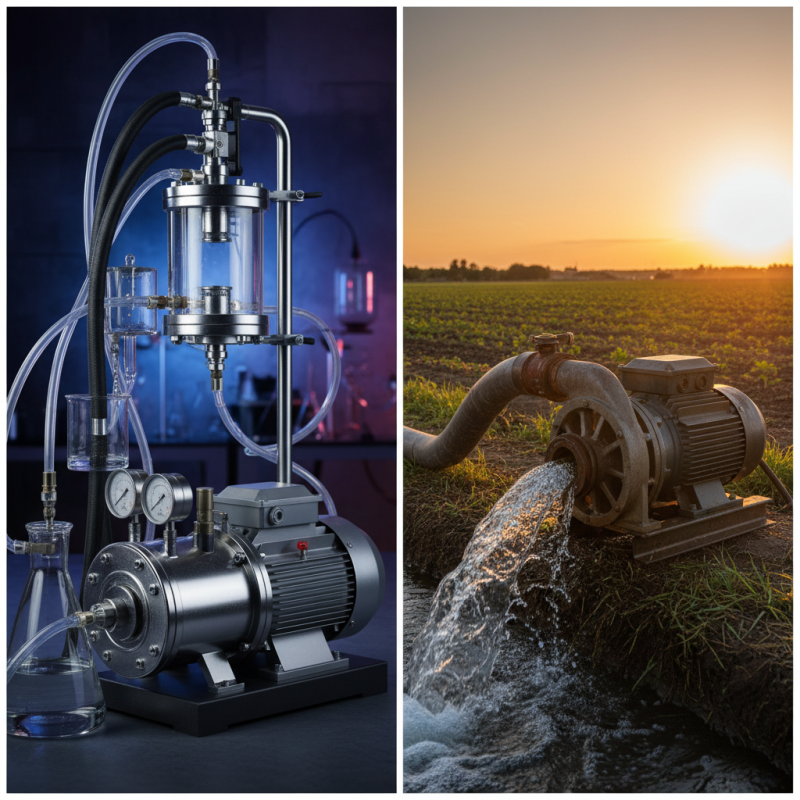
Differences in Functionality: Vacuum Pumps vs. Water Pumps
When distinguishing between vacuum pumps and water pumps, understanding their functionalities is crucial. Vacuum pumps create a vacuum by removing air from a sealed space. They are essential in applications like distillation or freeze-drying. In contrast, water pumps move water from one place to another, often used in agriculture or municipal water supply systems. According to a report by the Global Vacuum Pump Market, the demand for vacuum pumps is expected to grow at a CAGR of 6.5% by 2025.
Vacuum pumps generally operate under a low-pressure environment, reaching pressures as low as 0.1 mbar. Water pumps function under a high-pressure environment, and their efficiency varies based on the medium they transfer. Reports show that centrifugal water pumps can achieve efficiencies over 85%, while rotary vacuum pumps may have efficiencies ranging from 50-70%. This nuanced difference highlights the specific requirements of each type of pump.
It's interesting to note that the design of these pumps reflects their purposes. Vacuum pumps may incorporate mechanisms like ejectors or diaphragm systems. Water pumps often feature impellers or diaphragms as well. Despite their differences, both types of pumps must be maintained properly. Failure to do so can lead to performance issues and increased energy consumption. Understanding these details can enhance decision-making in industrial applications.
Understanding the Operating Principles of Vacuum Pumps
Vacuum pumps play a crucial role in various industrial applications. Their design allows them to remove air and other gases from a sealed environment. Understanding how they operate requires some basic knowledge of their principles. Vacuum pumps typically create a low-pressure zone, forcing air or gas out of a chamber. This process relies on a mechanical action, usually through rotation or positive displacement.
One key aspect is the type of vacuum pump: rotary, diaphragm, and scroll pumps each function differently. For instance, a rotary pump uses rotating blades to create a vacuum. This can lead to different applications and efficiency levels. Importantly, knowing the specific needs of your system can guide you in selecting the right vacuum pump.
Tips: Always check the specifications of the pump. Understand the depth of vacuum required for your application. Maintain proper sealing on all connections to ensure efficiency. Regular maintenance is vital; a poorly maintained pump can lead to inefficiency and unexpected costs. Ensure you regularly check for leaks or wear and tear.
Comparison of Vacuum Pumps and Water Pumps Based on Key Features
This chart illustrates the comparison of vacuum pumps and water pumps based on three key performance features: Maximum Pressure (in mmHg for vacuum pumps and bar for water pumps), Flow Rate (in L/min), and Efficiency (%) of each type.
Exploring Common Applications: Where Each Pump Excels
When it comes to choosing the right pump, understanding the specific applications where vacuum pumps and water pumps excel is crucial. Vacuum pumps are primarily used in industries where the removal of air or gas creates a vacuum. They are essential in packaging, medical applications, and semiconductor manufacturing. Reports indicate that the global vacuum pump market is projected to reach $3.8 billion by 2027, highlighting its increasing importance in these sectors.
On the other hand, water pumps are more versatile, found in agricultural irrigation, construction, and municipal water supply systems. They play a vital role in transporting water from one place to another, ensuring consistent supply for irrigation systems that cover millions of acres. According to the U.S. Environmental Protection Agency, nearly 80% of U.S. water supply comes from pumps, emphasizing their significance.
However, applying the wrong pump can lead to inefficiencies. Using a vacuum pump in a water system, for instance, can cause leaks or damage. In contrast, relying solely on water pumps for vacuum applications may result in inadequate performance. Choosing a pump requires careful consideration of these specifics to optimize efficiency and reliability.
Comparing Efficiency: Energy Consumption and Performance Metrics
When comparing vacuum pumps and water pumps, energy efficiency is a crucial factor. Data from industry reports indicate that water pumps typically operate at higher efficiencies, often achieving 70-90% under optimal conditions. In contrast, vacuum pumps may only reach 50-70% efficiency, primarily due to energy losses in the form of heat. Understanding these metrics can help you select the right pump for your needs based on performance requirements.
Another consideration is energy consumption. Water pumps generally require consistent power levels, depending on fluid properties. Vacuum pumps can consume significant energy during startup and operation. A study revealed that on-demand systems can reduce energy use by up to 30% compared to fixed-speed water pumps. This variation highlights the importance of evaluating your application.
Tips: Evaluate the specific requirements of your application. Consider both the efficiency and energy consumption. Regular maintenance is vital for optimal performance in both types of pumps. Pay attention to operational metrics to identify potential inefficiencies. Adjustments to pump settings may improve energy use significantly.
Material Considerations: Durability and Maintenance of Pump Types
When choosing between vacuum pumps and water pumps, material considerations play a critical role in longevity and maintenance. Vacuum pumps typically utilize metals like aluminum or stainless steel, which resist corrosion. These materials contribute to their durability in harsh conditions. However, over time, seals and gaskets can wear out, requiring regular maintenance checks.
Conversely, water pumps often incorporate polymer materials, which can be lightweight but less durable under extreme conditions. Ideally, a water pump must withstand constant exposure to moisture, which can lead to degradation. Choosing the right materials can prevent leaks and failures. While both types of pumps serve distinct purposes, understanding their material properties can inform better maintenance strategies.
It’s essential to remember that each pump type has its vulnerabilities. Users should consider the operating environment for optimal performance. For example, a vacuum pump in a dusty setting may need more frequent cleanings. Regular inspections can help identify issues early, avoiding costly repairs.
FAQS
: Vacuum pumps remove air and gases from sealed environments, creating a low-pressure zone.
Rotary pumps use rotating blades, while diaphragm and scroll pumps function differently for efficiency.
Understand your system's specific needs and the vacuum depth required for your application.
Regular maintenance is vital. Check for leaks and wear to avoid inefficiencies and costs.
They are used in packaging, medical, and semiconductor industries to create vacuums.
Water pumps achieve 70-90% efficiency, while vacuum pumps typically reach only 50-70% efficiency.
Yes, using a vacuum pump in a water system can lead to damage or leaks.
Adjusting pump settings can significantly improve energy efficiency and reduce consumption.
Poor maintenance and incorrect pump selection can lead to unexpected costs and inefficiencies.
It's crucial. Knowing the specifications ensures your pump meets the application requirements.
Conclusion
In understanding what is the difference between vacuum pump and water pump, it is essential to consider their functionalities, operating principles, and applications. Vacuum pumps are designed to create a vacuum by removing air and other gases from a sealed environment, making them ideal for tasks such as evaporating solvents and packaging food. In contrast, water pumps move liquid from one location to another, commonly used in irrigation, drainage, and in various industrial processes.
When comparing efficiency, vacuum pumps tend to have different energy consumption metrics than water pumps, which can impact overall performance. Material considerations also play a role; vacuum pumps often require specific materials to withstand low pressure, while water pumps may need to resist corrosion and wear from fluid interactions. Understanding these nuances is crucial for selecting the appropriate pump for specific applications.

 Tongyi Machinery