Choosing a chemical pump in 2026 requires more than matching flow rate and pressure. How to choose industrial pumps for chemical applications begins with the fluid itself: concentration, temperature, viscosity, vapor pressure, solids, and toxicity.
The U.S. Department of Energy identifies pumping systems as significant industrial electricity users, making efficiency a practical operating concern. The International Energy Agency’s The Future of Petrochemicals also describes chemicals as one of industry’s largest energy-consuming sectors. These findings make lifecycle cost increasingly important, not just purchase price. Grand View Research’s Industrial Pumps Market report indicates continued market growth through the decade, driven by chemical processing, water treatment, and manufacturing investment.
Pump engineer Lev Nelik offers a useful principle: “The pump is only one component in the system.” That sentence deserves attention. Pipe friction, control valves, suction conditions, seals, and standby arrangements can change real performance dramatically.
A glass-lined reactor may need a corrosion-resistant magnetic-drive pump. A solvent transfer line may require controlled vapor handling and verified seal compatibility. A slurry can destroy an attractive efficiency calculation within months. Small details matter.
Even experienced teams get this wrong. A chemically compatible casing does not guarantee compatible elastomers, bearings, or coatings. Material charts can simplify reality too much. Therefore, this guide compares centrifugal, positive-displacement, sealless, and canned-motor designs against actual process conditions, maintenance access, safety requirements, and total cost. Standards such as API 685, ISO 5199, and Hydraulic Institute guidance provide useful checkpoints, but site experience remains essential.
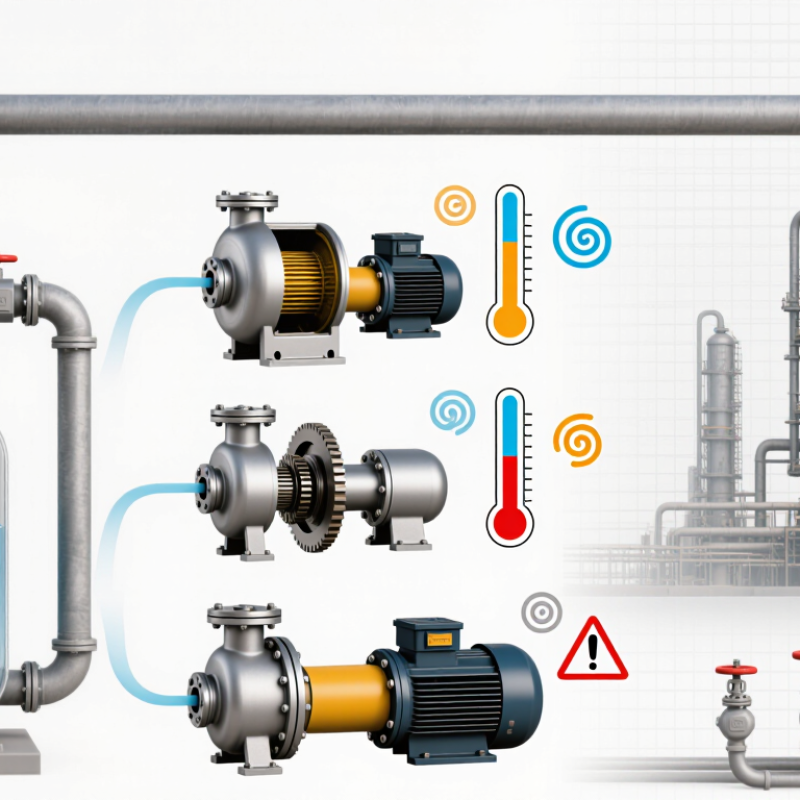
Choosing industrial pumps for chemicals in 2026 starts with defining the duty, not browsing a catalog. Record flow rate, discharge pressure, suction pressure, temperature, viscosity, density, vapor pressure, and operating hours. Include startup, shutdown, cleaning, and upset conditions. A pump sized for normal flow may struggle during cold mornings or a blocked filter. Measure the real process.
In field assessments, I compare these values with actual liquid samples and operating records. Chemical compatibility depends on concentration, temperature, impurities, and exposure time. A liquid that seems mild can attack an elastomer after repeated heating cycles. Check wetted materials, seals, gaskets, and shaft protection together. Do not choose materials from chemical names alone. That shortcut often fails.
Confirm available NPSH against the pump’s required NPSH under the worst suction condition. Review vapor pressure, pipe friction, tank level, and inlet temperature. Consider whether the process needs steady flow, variable speed, gentle handling, or accurate dosing. Specify containment, leak detection, drain points, and safe maintenance access. A neat specification sheet can still mislead. I have learned to question clean numbers, especially when operators report pulsation, unexpected corrosion, or frequent seal replacement. Record those observations before final selection.
Use the following specification framework to define the chemical service before selecting a pump type, construction material, seal arrangement, and control method.
| Requirement Dimension | Data to Define | Typical Engineering Input or Range | Why It Matters for Pump Selection | Verification Method |
|---|---|---|---|---|
| Chemical Identity | Exact chemical name, concentration, mixture composition, impurities, and solids content. | Examples include acids, alkalis, solvents, oxidizers, brines, slurries, and mixed chemical streams. Concentration should be stated as mass % or volume %. | Small concentration changes can significantly affect corrosion rate, viscosity, density, vapor pressure, and elastomer compatibility. | Safety Data Sheet, process composition, laboratory analysis, and operating history. |
| Required Flow Rate | Normal, minimum, maximum, startup, shutdown, and future design flow. | Specify in m³/h, L/min, or gpm. Include the expected operating range rather than only one design point. | Determines pump capacity, impeller or displacement size, minimum continuous stable flow, and control strategy. | Process mass balance, flow meter data, production schedule, and design calculations. |
| Total Dynamic Head | Static elevation, friction losses, equipment pressure losses, control-valve losses, and required discharge pressure. | Specify in m or ft of liquid, and identify whether the value is based on clean piping or actual process conditions. | Head determines the pressure capability and operating point. Incorrect head estimates can cause underperformance or excessive energy use. | Piping layout, line-size calculation, pressure data, valve data, and system curve. |
| Temperature | Normal, minimum, maximum, startup, shutdown, and upset temperature. | Record the liquid temperature in °C or °F. Include ambient temperature and any heat tracing or cooling conditions. | Temperature changes chemical aggressiveness, vapor pressure, viscosity, seal life, bearing life, and allowable material limits. | Temperature transmitters, process design basis, and thermal balance. |
| Viscosity | Dynamic or kinematic viscosity at the actual pumping temperature. | Specify in mPa·s, cP, or cSt. Water-like liquids are close to 1 mPa·s at room temperature; heavier liquids may exceed 100 mPa·s. | High viscosity reduces centrifugal-pump performance and may favor positive-displacement technology, slower speed, or heating. | Laboratory measurement, process data, or a validated viscosity-temperature curve. |
| Density and Specific Gravity | Density at operating temperature and concentration. | Specify in kg/m³ or specific gravity. Density can change with temperature and dissolved solids. | Density affects motor power, pressure conversion, pump shaft load, and positive-displacement relief-valve sizing. | Laboratory measurement, density meter, or approved process-property data. |
| Vapor Pressure and NPSH | Vapor pressure at maximum operating temperature, suction pressure, liquid level, and suction-line losses. | Maintain available NPSH above required NPSH with an appropriate engineering margin. The exact margin depends on the pump, fluid, and operating variability. | Insufficient NPSH can cause cavitation, vibration, noise, reduced capacity, and rapid damage to hydraulic components. | Vapor-pressure data, tank pressure, liquid-level range, suction piping calculation, and pump curve. |
| Corrosion Compatibility | Compatibility of wetted metallic and non-metallic materials with the complete chemical mixture. | Evaluate casing, impeller, shaft, fasteners, liner, gaskets, O-rings, diaphragms, hoses, and coatings. Compatibility must be checked at the actual concentration and temperature. | A material that performs well with a pure chemical may fail in a concentrated mixture, contaminated stream, or elevated-temperature service. | Chemical-resistance data, corrosion tables, supplier compatibility confirmation, and site experience. |
| Seal and Containment | Mechanical seal, magnetic-drive containment, packed seal, diaphragm, or sealless configuration. | For hazardous, toxic, volatile, or crystallizing liquids, consider double containment, a sealless design, compatible barrier fluid, or leak detection. | Seal failure can create personnel exposure, emissions, product loss, environmental release, and unplanned downtime. | Hazard assessment, emissions requirements, seal plan review, and maintenance history. |
| Solids and Crystallization | Particle size, concentration, hardness, shape, settling tendency, and crystallization temperature. | State solids as mass %, volume %, or mg/L. Identify whether solids are abrasive, fibrous, sticky, or likely to settle during shutdown. | Solids influence clearances, wear rate, clogging risk, impeller design, valve selection, flushing, and minimum velocity. | Screening or particle analysis, slurry testing, operating observations, and shutdown inspection. |
| Pump Technology | Suitability of centrifugal, positive-displacement, air-operated double-diaphragm, dosing, or sealless pump technology. | Centrifugal pumps commonly suit low-to-moderate viscosity and continuous flow. Positive-displacement pumps suit metering, high viscosity, or relatively high differential pressure. | The pump principle must match the flow range, viscosity, pressure profile, solids content, pulsation tolerance, and required controllability. | System curve, fluid-property review, duty-cycle analysis, and performance testing. |
| Control and Turn-Down | Required turndown, batch accuracy, ramp rate, variable-speed operation, and minimum flow. | Define normal operation and the lowest stable flow. Centrifugal pumps may require a bypass or minimum-flow line; metering service may require controlled displacement. | Improper control can cause overheating, recirculation, loss of accuracy, unstable operation, or excessive shear. | Control narrative, production profile, pump curve, and minimum-flow calculation. |
| Pulsation and Shear | Acceptable pressure pulsation, flow pulsation, and sensitivity of the chemical to shear. | Consider pulsation dampeners for reciprocating or diaphragm pumps and low-shear hydraulic designs for shear-sensitive fluids. | Pulsation can damage instruments and piping, while excessive shear may alter emulsions, polymers, biological products, or crystal structure. | Process sensitivity review, pressure logging, and laboratory shear testing. |
| Electrical and Area Classification | Motor voltage, frequency, enclosure, ingress protection, hazardous-area classification, and temperature class. | Specify the applicable electrical code and hazardous-area requirements. Use suitable motor and instrumentation ratings for flammable or explosive atmospheres. | Electrical incompatibility can create ignition hazards, premature motor failure, regulatory non-compliance, or unsafe maintenance conditions. | Site electrical standard, area-classification drawings, motor data, and inspection requirements. |
| Reliability and Maintenance | Required availability, duty/standby philosophy, inspection interval, spare-parts strategy, and access constraints. | Define continuous or intermittent service, expected annual operating hours, allowable downtime, and whether online maintenance is required. | Reliability requirements affect pump redundancy, seal arrangement, materials, instrumentation, spare-parts inventory, and total lifecycle cost. | Criticality assessment, maintenance records, reliability targets, and lifecycle-cost analysis. |
| Safety and Regulatory Requirements | Worker exposure limits, containment, emissions, emergency drainage, chemical handling, and applicable local regulations. | Document whether the liquid is toxic, flammable, oxidizing, corrosive, reactive, or environmentally hazardous. | Safety requirements may determine the pump architecture, enclosure, leak detection, isolation valves, ventilation, and emergency systems. | Safety Data Sheet, hazard study, environmental permit, process safety review, and regulatory checklist. |
| Acceptance Testing | Required verification of flow, head, power, leakage, vibration, noise, materials, and control response. | Define test fluid, test conditions, tolerances, documentation, and whether factory, site, or performance testing is required. | Testing confirms that the selected pump meets the actual duty rather than only a nominal catalog point. | Approved inspection and test plan, calibrated instruments, performance curve, and commissioning records. |
Record flow rate, discharge pressure, suction pressure, temperature, viscosity, density, and vapor pressure. Include operating hours. Check startup, shutdown, cleaning, and upset conditions. Measure the real process.
Concentration, temperature, impurities, and exposure time can change the chemical risk. A mild liquid may damage an elastomer after repeated heating. Do not select materials from chemical names alone.
Review the casing, impeller, shaft, gaskets, seals, and shaft protection separately. A resistant pump body cannot prevent seal failure. Look for swelling, cracks, discoloration, pitting, and deposits.
Test the actual mixture at its operating temperature when possible. Compare compatibility charts with safety data and verified test reports. A small pilot test may prevent an expensive replacement.
Compare available NPSH with the pump’s required NPSH under the worst suction condition. Review vapor pressure, pipe friction, tank level, and inlet temperature. Startup conditions matter.
Request current certificates, material traceability, test records, and written limits. Confirm pressure rules, electrical classification, and site safety procedures. “Chemical resistant” is not enough.
Check foundation stiffness, pipe alignment, drainage, seal access, and NPSH margin. Measure suction conditions during startup. Forced pipe alignment can create vibration. Small errors matter.
Include energy, spare parts, monitoring, downtime, disposal, and technician hours. Build a five- or ten-year cost model. A cheaper pump may need frequent seal replacement.
Record pulsation, unexpected corrosion, leakage, frequent seal replacement, crystals, gas, and abrasive particles. Operators may notice problems that drawings hide. I would question clean numbers.
Choosing the right pump is essential for safe, efficient, and reliable chemical processing. This guide explains how to choose industrial pumps for chemical applications by first defining the required flow rate, pressure, temperature, viscosity, solids content, duty cycle, and operating environment. It then highlights the importance of selecting wetted materials that resist corrosion, chemical attack, abrasion, and temperature-related degradation. Comparing pump types according to process demands helps users identify the most suitable option for continuous transfer, metering, circulation, or high-pressure service.
The article also examines safety features, operational reliability, maintenance accessibility, energy efficiency, and the risks of leakage or seal failure. Before installation, users should verify applicable industry standards, site conditions, piping arrangements, electrical requirements, and protection measures. Finally, evaluating purchase price together with energy use, spare parts, maintenance, downtime, and expected service life provides a clearer view of total lifecycle costs. A structured selection process can improve process stability, reduce long-term expenses, and support safer chemical handling.

 Tongyi Machinery