How to Choose a Self Priming Pump for Water Transfer?

Time:2026-10-08 Author:Henry
0%

Choosing a pump for water transfer is not simply a matter of matching pipe size and motor power. The site tells a more honest story. A pump may face a shallow suction line, trapped air, fluctuating water levels, muddy water, or repeated stop-start cycles. These details can decide whether a system transfers water smoothly or loses prime beside a half-filled tank.

Why is self-priming pump suitable for water transfer? Its practical advantage is air-handling capability. Unlike a conventional centrifugal pump, a self-priming model can remove air from the suction pipe and restore liquid movement after the casing is initially filled. This feature suits construction drainage, irrigation, wastewater movement, and tank-to-tank transfer. Less manual intervention helps operators respond faster. Still, “self-priming” does not mean maintenance-free. Excessive suction lift, blocked strainers, leaking foot valves, or an incorrectly sized impeller can reduce performance sharply.

Pump authority Igor J. Karassik described the basic function clearly: “A pump is a machine that imparts energy to a fluid.” That principle remains useful when comparing pump curves, efficiency, materials, and duty points. However, a careful selection also needs field experience. A pump that performs well in a catalog may struggle with long suction piping or air-filled hoses. The best choice considers flow rate, total dynamic head, liquid cleanliness, temperature, solids content, priming time, and service access. Small omissions matter. Therefore, this guide examines the selection process with practical limits, measurable data, and room for honest reconsideration.
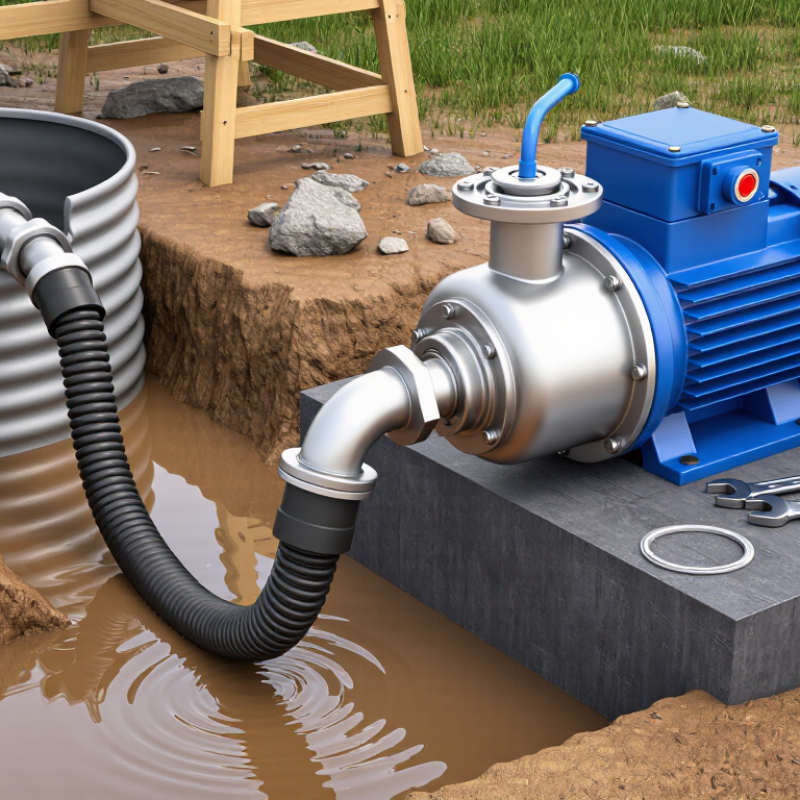
How to Choose a Self Priming Pump for Water Transfer?

Understanding How a Self-Priming Pump Works

How to Choose a Self Priming Pump for Water Transfer?

Understanding how a self-priming pump works is essential before comparing flow rates. Inside the casing, the impeller mixes trapped air with water. This air-water mixture moves toward the discharge port. Separated air leaves the casing, while water returns through an internal recirculation path. The process continues until suction piping fills with water. Then, the pump operates like a conventional centrifugal pump.

A practical limit matters. Atmospheric pressure allows a theoretical suction lift near 10.3 metres at sea level. Friction, water temperature, altitude, and pipe leaks reduce the usable height. In many installations, 7 to 8 metres is already demanding. The U.S. Department of Energy’s pumping-system guidance recommends evaluating actual system resistance, not relying on catalogue flow alone. That distinction is easy to miss. A leaking foot valve can make a capable pump appear defective.

For selection, define required flow, total dynamic head, priming time, liquid temperature, and solids content. Check the manufacturer’s performance curve at the real operating point. Hydraulic Institute life-cycle-cost guidance indicates that energy may exceed 40% of total pump ownership cost. Efficiency therefore deserves attention, even for intermittent transfer. I have seen users oversize pumps for faster filling. That choice can increase throttling losses and cycling. It is not always better. Also inspect suction pipe diameter, valve arrangement, and access for cleaning. A self-priming pump forgives some trapped air, but it cannot correct poor installation.

How to Choose a Self-Priming Pump for Water Transfer?

Understanding how a self-priming pump works starts with suction lift. As the vertical distance between the water source and the pump increases, more atmospheric pressure is consumed to raise the water. The values below are calculated for clean water at sea level using 9.81 kPa of pressure per metre of water head.

Keep the suction lift as short as possible and select a pump using its performance curve, required flow rate, pipe-friction losses, and site elevation. In practical installations, the achievable suction lift is lower than the theoretical atmospheric limit because of vapor pressure, air leakage, temperature, and inlet losses. A self-priming pump must also have an airtight suction line and sufficient liquid in its casing to begin the priming cycle.

Identifying Your Water Transfer Requirements

How to Choose a Self Priming Pump for Water Transfer?

Identifying your water transfer requirements is the real starting point. Measure the required flow rate in liters per minute or gallons per minute. Then calculate total dynamic head, including vertical lift, pipe friction, valves, and discharge pressure. A pump that meets flow but misses head will underperform.

Check the suction conditions carefully. Record suction lift, pipe length, inlet diameter, water temperature, and the distance to the source. Self-priming pumps can handle interrupted suction, but they still need suitable suction piping and enough liquid for priming. The U.S. Geological Survey estimated 322 billion gallons of water were withdrawn daily in the United States during 2015. Irrigation represented one of the largest uses. FAO AQUASTAT reports that agriculture accounts for roughly 70% of global freshwater withdrawals. These figures show why duty cycles and seasonal demand matter. They do not size a pump by themselves. Real sites are rarely tidy.

Tips: Write down normal and peak flow separately. Include suspended solids, if present. Confirm allowable dry-run time with the technical manual. Leave room for uncertainty. A modest safety margin is useful, but excessive oversizing can increase energy use and cycling. Hydraulic Institute guidance also stresses checking net positive suction head, or NPSH, to reduce cavitation risk. Recheck the calculation after installation; field conditions often expose assumptions that looked reasonable on paper.

How to Choose a Self Priming Pump for Water Transfer? - Identifying Your Water Transfer Requirements
Water Transfer Requirement Typical Application Required Flow Rate Total Dynamic Head Recommended Pump Type Key Selection Criteria Recommended Inlet Arrangement Important Operating Notes
Small Tank or Pool Drainage Residential tanks, garden ponds, shallow pools, and light-duty water removal 30–80 L/min
(1.8–4.8 m³/h)
10–20 m Compact centrifugal self-priming pump Low power consumption, easy portability, corrosion-resistant wetted parts, and a built-in carrying handle Short suction hose with a foot valve and coarse strainer Keep the suction hose as short and straight as possible. Do not run the pump dry.
Rainwater Transfer Moving collected rainwater from a storage tank to irrigation lines or another reservoir 50–150 L/min
(3–9 m³/h)
15–30 m Electric self-priming centrifugal pump Continuous-duty motor, suitable flow at the required head, automatic pressure control if needed, and reliable dry-run protection Rigid or reinforced suction pipe with a foot valve positioned below the minimum water level Use a filter when leaves, sediment, or organic debris may enter the suction line.
Agricultural Irrigation Transfer Supplying sprinklers, drip-irrigation systems, or field storage tanks 150–500 L/min
(9–30 m³/h)
25–50 m Heavy-duty centrifugal self-priming pump Flow must match the irrigation system demand; verify pressure losses through pipes, filters, valves, and elevation changes Large-diameter suction line with minimal bends and a properly sized strainer Oversizing the pump can cause excessive pressure, energy use, and water consumption. A pressure gauge is recommended.
Construction Site Dewatering Removing groundwater, rainwater, and relatively clean site water from excavations 300–1,000 L/min
(18–60 m³/h)
20–45 m Engine-driven or electric heavy-duty self-priming pump High solids tolerance, abrasion-resistant impeller, robust casing, fast priming, and easy access for cleaning Short, reinforced suction hose with a screened inlet kept clear of mud and debris For water containing large solids or heavy sludge, a solids-handling or trash pump may be more suitable than a standard water pump.
Emergency Floodwater Removal Basements, roads, low-lying areas, and temporary flood-control operations 500–2,000 L/min
(30–120 m³/h)
15–35 m Portable engine-driven self-priming pump High flow capacity, rapid deployment, fuel availability, rugged frame, and reliable operation under changing water levels Reinforced suction hose with a large-area strainer; avoid sharp bends and air leaks Install the pump on stable ground above the floodwater where possible. Provide adequate ventilation for engine exhaust.
Industrial Process Water Transfer Moving clean or mildly contaminated water between process tanks and utility systems 100–800 L/min
(6–48 m³/h)
30–70 m Industrial self-priming centrifugal pump Material compatibility, temperature rating, seal selection, motor duty rating, and stable performance at the operating point Properly supported suction piping with an isolation valve and accessible strainer Confirm fluid temperature, pH, suspended solids, and chemical compatibility before selecting casing, impeller, and seal materials.
Long-Distance Water Transfer Transferring water between distant tanks, reservoirs, or remote work areas 80–400 L/min
(4.8–24 m³/h)
40–100 m High-head self-priming centrifugal pump Calculate friction loss, static lift, pipe diameter, elevation profile, and required discharge pressure before choosing pump capacity Use the largest practical suction diameter and minimize suction lift; install a check valve where appropriate Long discharge pipes can create substantial friction loss. Select the pump from a performance curve rather than maximum-rated flow alone.
Water with Sand or Fine Sediment Well-point drainage, river-water transfer, excavation drainage, and sediment-bearing surface water 150–700 L/min
(9–42 m³/h)
20–50 m Abrasion-resistant self-priming pump or solids-handling pump Wear-resistant materials, replaceable wear components, suitable solids passage, and easy inspection access Use a floating or elevated strainer to reduce sediment intake where site conditions permit Fine sand can accelerate wear on impellers, seals, and casing surfaces. Plan regular inspection and flushing.
Fire-Water or Backup Transfer Emergency water supply, reserve tanks, and backup water distribution systems 200–1,000 L/min
(12–60 m³/h)
40–80 m High-reliability self-priming centrifugal pump Required emergency flow, discharge pressure, standby readiness, automatic starting method, and periodic testing capability Dedicated suction line with an accessible isolation valve and appropriately sized strainer Emergency systems may be subject to local codes and approval requirements. Confirm applicable regulations before installation.
Clean Water Transfer Between Tanks Municipal, commercial, agricultural, or utility storage-tank filling 100–600 L/min
(6–36 m³/h)
20–45 m Standard electric self-priming centrifugal pump Match flow to tank volume and filling time; verify motor voltage, duty cycle, noise level, and control requirements Flooded suction is preferred; if suction lift is unavoidable, use an airtight suction line and foot valve Install a float switch, level controller, or automatic shutoff to prevent overflow and dry running.
High-Suction-Lift Installation Transferring water from a source located below the pump level 50–300 L/min
(3–18 m³/h)
15–35 m total system head Self-priming pump designed for suction-lift service Actual suction lift, pipe length, air-tightness, priming chamber capacity, and expected priming time Use a short, continuously rising suction pipe with a foot valve and no high points that can trap air Atmospheric pressure limits theoretical suction lift. In practical installations, keep vertical suction lift well below approximately 8 m and follow the pump manufacturer’s limit.

Matching Pump Capacity to Flow and Head

Choosing a self-priming pump starts with two measurements: required flow and total dynamic head. Flow is the water volume delivered per minute. Head is the pressure needed to overcome elevation, pipe friction, valves, and discharge pressure. A 40-meter lift is not the same as a 40-meter pipe run. Both affect the pump duty point.

Measure the real route, not an ideal drawing. For example, a transfer line may need 18 m³/h at 24 metres of total head. Add friction from elbows, a check valve, and a partially closed outlet. Then compare this duty point with the pump curve. The pump should operate near its best efficiency point, not at the curve’s extreme edge. The U.S. Department of Energy’s Improving Pumping System Performance sourcebook reports that pumping systems can represent 25% to 50% of industrial electricity use. Small sizing errors can therefore become expensive.

Do not select capacity from pipe diameter alone. Oversizing may cause unstable operation, high energy use, and repeated cycling. Undersizing may produce weak discharge and poor priming recovery. Hydraulic Institute guidance also stresses checking suction conditions and net positive suction head. Keep the suction lift short, use an adequately sized suction pipe, and verify the fluid temperature. In field work, I would record actual flow with a temporary meter before purchasing. My first estimate is often wrong. That is useful information, not failure. Data should correct the assumption.

Choosing the Right Pump Materials and Power Source

Choosing materials and a power source requires more than matching pipe size. For clean water, cast iron can offer practical strength and lower purchase cost. Stainless steel is safer where chlorides, mild chemicals, or frequent washing may accelerate corrosion. Engineered thermoplastics can resist some chemicals, but temperature limits are often overlooked. Check the liquid’s pH, suspended solids, temperature, and debris before selecting the casing, impeller, and mechanical seal.

A neat material chart can mislead. Field inspections often reveal that the seal fails before the pump body. Sand, grit, and dry-running events may cause more damage than water chemistry. For abrasive transfer, hardened internal parts may extend service life, although they can increase cost and weight. The Hydraulic Institute’s pump lifecycle guidance indicates that energy can represent 40% or more of total ownership cost. Therefore, compare efficiency at the actual duty point, not only the rated horsepower.

Electric motors suit sites with stable grid power and regular operation. Variable-speed drives can reduce throttling losses, but poor programming may create unstable suction conditions. The U.S. Department of Energy’s pumping-system guidance reports that pumping can consume 25–50% of industrial facility electricity, depending on the process. Diesel power helps remote work, yet fuel storage, noise, ventilation, and maintenance require attention. Generator sizing should include starting current, not just running watts. I would also leave a modest safety margin, but not an oversized motor; more power cannot correct an undersized suction line.

Checking Installation, Maintenance, and Safety Features

Choosing a self-priming pump starts with the installation, not the catalog. Measure the suction lift, pipe length, water temperature, and expected flow rate. A long or narrow suction line can increase friction and delay priming. Keep the suction pipe short, airtight, and gently curved. Install the pump close to the water source, with a stable, level base. The pump should also have enough ventilation for its motor.

Maintenance directly affects transfer reliability. Inspect seals, hose connections, strainers, and check valves before each demanding operation. Replace damaged gaskets early. Small air leaks can stop priming completely. The U.S. Department of Energy’s Improving Pumping System Performance report states that pumping systems may account for about 25% of industrial electricity use. That figure makes efficiency checks worthwhile, although real savings depend on system design and operating hours. A flow test can reveal wear more clearly than noise alone.

Tips: Choose overload protection, dry-run protection, grounding, and an emergency shutoff. Confirm the enclosure rating for wet locations. Follow the manufacturer’s isolation procedure before opening the casing. The Hydraulic Institute recommends checking operating conditions against the pump’s performance curve. Do not rely on one test. Record flow, pressure, vibration, and priming time monthly. A practical note: even experienced operators sometimes overlook a loose suction clamp. That small mistake can resemble a failed pump.

FAQS

How does a self-priming pump remove air from the suction pipe?

The impeller mixes trapped air with water inside the casing. Air exits through the discharge path. Water recirculates internally until suction piping fills.

What suction lift can a self-priming pump realistically handle?

Atmospheric pressure allows about 10.3 metres theoretically at sea level. Friction, leaks, temperature, and altitude reduce this. Seven to eight metres may already be demanding.

What measurements are needed before selecting a pump?

Define required flow, total dynamic head, priming time, liquid temperature, and solids content. Measure the actual route. Do not trust an ideal drawing alone.

How should flow and head be matched to pump performance?

Compare the real duty point with the performance curve. For example, check 18 m³/h at 24 metres of total head. Aim near the best efficiency region.

Why can oversizing a pump create problems?

An oversized pump may waste energy, cause throttling losses, and cycle repeatedly. Faster filling is not always better. I have made that assumption before.

How can installation affect priming reliability?

Keep the suction pipe short, wide enough, airtight, and gently curved. Place the pump near the water source. A loose clamp can mimic pump failure.

Which parts should be inspected during maintenance?

Check seals, gaskets, hose connections, strainers, and check valves. Inspect them before demanding operation. Small air leaks can stop priming completely.

Which safety features are useful for water transfer?

Consider overload protection, dry-run protection, grounding, and an emergency shutoff. Confirm the enclosure suits wet locations. Isolate power before opening the casing.

How can operators verify that a pump is working properly?

Record flow, pressure, vibration, and priming time monthly. A temporary flow meter can reveal wear better than noise alone. My first estimate may be wrong.

Conclusion

Choosing the right self-priming pump for water transfer begins with understanding how it operates. Unlike standard pumps, it can remove air from the suction line and start moving water without manual priming, making it practical for tanks, wells, drainage systems, and other changing water sources. The question “Why is self-priming pump suitable for water transfer” can be answered by its convenient startup, flexible installation, and reliable performance when air may enter the suction pipe.

Before selecting a pump, define the required flow rate, total head, suction lift, water quality, and operating frequency. Match the pump’s capacity to these conditions to avoid poor performance or unnecessary energy use. Consider materials that resist corrosion and wear, along with a suitable electric or engine-powered drive. Finally, check installation space, access for maintenance, dry-run protection, overload protection, noise levels, and safe operating procedures. A properly sized and maintained pump can provide efficient, dependable water transfer over the long term.

Henry

Henry

Henry is a dedicated marketing professional with a profound expertise in the company's offerings. With years of experience in the industry, he possesses an impressive understanding of the market dynamics and consumer behaviors that drive success. Henry is committed to sharing his insights through......