Choosing an industrial pump supplier is not merely a purchasing task. It is a decision about uptime, energy consumption, safety, and long-term maintenance. The U.S. Department of Energy reports that pumping systems can account for up to 25% of electricity use in industrial facilities. A poor selection may therefore create years of hidden operating costs.
This guide explains How to choose a reliable industrial pump supplier through practical, evidence-based checks. Supplier experience matters, but product claims alone are not enough. Ask for verified performance curves, materials documentation, factory test records, and references from similar applications. For oil, chemical, water, or mining operations, the supplier should understand relevant requirements, including ISO 5199 or API 610 where applicable. Standards do not replace engineering judgment.
Service quality is equally important. Grand View Research’s Industrial Pumps Market report identifies efficiency, infrastructure investment, and process reliability as major market drivers. Yet market growth does not prove supplier competence. A polished website can hide weak after-sales support. Request response-time commitments, spare-parts availability, commissioning procedures, and clear warranty terms. Visit the facility if the project is critical. Look closely at calibration records and test equipment. Small details often reveal operational discipline.
A reliable supplier should calculate total cost of ownership, not only quote the lowest purchase price. Compare efficiency, seal life, maintenance intervals, delivery risk, and training support. Some decisions will remain uncertain. Operating data may be incomplete, and supplier references may be selective. That is why a documented technical review, independent verification, and cautious pilot order can provide stronger assurance than promises alone.
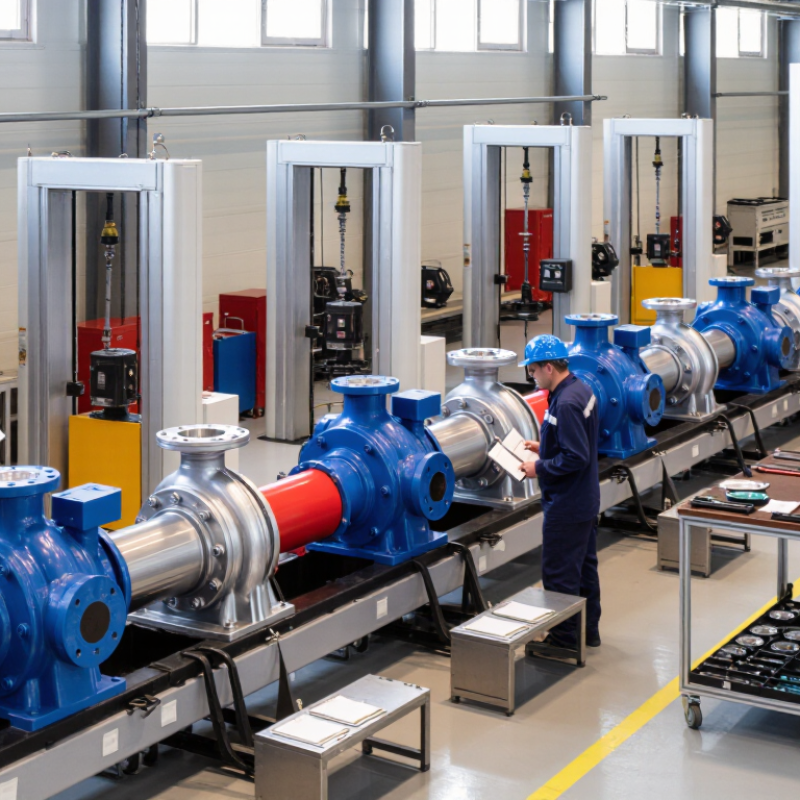
How to Choose a Reliable Industrial Pump Supplier?
Before contacting a supplier, define the pump’s real working conditions. Record the required flow rate, total head, fluid temperature, viscosity, density, and solid content. Also note suction pressure, discharge pressure, and available power. These details prevent suppliers from recommending equipment based on guesses. A pump handling clean water cannot automatically manage abrasive slurry or thick oil. Check the required operating point, not only the maximum capacity. Continuous, intermittent, and emergency duties may require different designs. NPSH conditions deserve careful attention because cavitation can damage impellers and seals quickly.
Tips: Prepare a simple duty sheet with measured values, not assumptions. Include pipe length, diameter, elbows, valve positions, and elevation changes. Ask the supplier to explain efficiency, materials, seal selection, and expected maintenance intervals. Request performance curves and confirm them against your actual operating point. A reliable supplier should ask detailed questions before offering a quotation.
I once saw a pump selected from flow rate alone. The motor was adequate, but the fluid contained unexpected particles. Wear appeared within weeks. That mistake showed why field conditions matter more than a neat specification sheet. Review chemical compatibility, ambient temperature, installation space, noise limits, and electrical requirements. Leave room for uncertainty, but do not hide it. Share seasonal changes and unusual startup conditions with the supplier. A practical discussion may reveal that the first pump size was too optimistic.
| Requirement Dimension | Example Operating Requirement | Recommended Specification to Request | Supplier Verification Point | Why It Matters |
|---|---|---|---|---|
| Liquid Type | Cooling water, process water, chemical solution, oil, or slurry | Liquid name, concentration, pH, toxicity, flammability, and compatibility requirements | Request material compatibility data and a written application review | The liquid determines pump materials, seal design, safety controls, and service life |
| Flow Rate | 100 m³/h at the required duty point | Normal, minimum, maximum, and future flow; specify m³/h, L/min, or GPM | Check the pump curve at the actual operating point, not only the maximum flow | A pump selected outside its best efficiency region may waste energy and experience excessive wear |
| Total Dynamic Head | 45 m of liquid head at the normal flow rate | Static elevation, pipe friction, valves, filters, heat exchangers, and required discharge pressure | Ask for a calculation showing static head, friction losses, and pressure conversion | Incorrect head calculations can cause insufficient delivery or unnecessary energy consumption |
| Temperature | Liquid temperature from 20°C to 90°C | Normal, minimum, maximum, start-up, shutdown, and possible temperature excursions | Confirm casing, seal, gasket, bearing, and motor temperature limits | Temperature affects viscosity, vapor pressure, sealing performance, and material strength |
| Viscosity | Process liquid with a viscosity of 150 cP | Dynamic viscosity in cP or mPa·s at operating temperature and density in kg/m³ | Request corrected performance data for viscous liquids | Higher viscosity can reduce centrifugal pump capacity and efficiency and increase motor load |
| Solids Content | Slurry containing 3% suspended solids with particles up to 5 mm | Solids concentration, particle size, hardness, shape, and settling characteristics | Verify impeller passage, abrasion resistance, and clogging protection | Solids can cause erosion, blockage, imbalance, and premature seal or impeller failure |
| System Pressure | Discharge pressure of approximately 6 bar(g) | Suction pressure, discharge pressure, design pressure, and pressure fluctuations | Confirm casing pressure rating and hydrostatic test requirements | The pump must safely withstand both normal operation and foreseeable pressure events |
| NPSH Available | NPSH available of 6 m at the operating temperature | Tank level, suction line losses, liquid vapor pressure, and NPSH available across operating cases | Compare NPSH available with NPSH required and include a practical safety margin | Adequate NPSH margin helps prevent cavitation, vibration, noise, and damage |
| Operating Pattern | Continuous duty, 24 hours per day, with occasional starts | Duty cycle, starts per hour, standby arrangement, seasonal operation, and required availability | Confirm motor duty rating, bearing life, seal arrangement, and spare-pump strategy | Continuous-duty systems require different reliability and maintenance planning than intermittent systems |
| Control Method | Variable flow controlled by a variable frequency drive | Speed range, control signal, minimum speed, ramp time, and overload protection | Check motor compatibility, minimum continuous flow, and control-panel interfaces | Proper control selection improves efficiency and reduces throttling losses and hydraulic stress |
| Materials of Construction | Corrosive aqueous solution at moderate temperature | Casing, impeller, shaft, wear ring, fastener, gasket, and seal materials | Request corrosion-resistance justification based on concentration and temperature | Material selection directly affects corrosion rate, contamination risk, and maintenance intervals |
| Mechanical Seal | Leak-sensitive chemical process service | Seal faces, elastomer type, flush plan, pressure, temperature, and emission requirements | Ask for seal compatibility information and recommended maintenance procedures | The correct seal design reduces leakage, unplanned shutdowns, and safety exposure |
| Motor and Power Supply | 400 V, 50 Hz, three-phase electrical supply | Voltage, frequency, phase, rated power, efficiency class, enclosure, and hazardous-area classification | Verify motor sizing at maximum operating load and confirm local electrical requirements | Correct motor selection prevents overload, overheating, nuisance trips, and excessive energy use |
| Installation Conditions | Indoor installation with limited space and ambient temperature up to 40°C | Available footprint, nozzle orientation, foundation, ventilation, altitude, noise limits, and lifting access | Request dimensional drawings, connection details, foundation loads, and installation instructions | Physical and environmental constraints influence pump configuration and commissioning cost |
| Applicable Standards | Industrial process service requiring documented quality control | Applicable pump, motor, pressure equipment, electrical, safety, and environmental standards | Confirm standards stated in the quotation and request certificates where required | Standards support consistent design, testing, traceability, and regulatory compliance |
| Testing and Documentation | Performance verification before shipment | Performance curve, test report, material certificates, drawings, manuals, spare-parts list, and inspection plan | Define required documents, acceptance criteria, witness points, and delivery format in the purchase order | Complete documentation improves installation, operation, audits, troubleshooting, and future maintenance |
| After-Sales Support | Critical process requiring rapid technical assistance | Response time, commissioning support, service coverage, spare-parts availability, and warranty terms | Request written service commitments and verify access to replacement parts and trained technicians | Strong support can reduce downtime and total ownership cost throughout the pump’s operating life |
Request certificates matching the pump, service conditions, and destination market. Check certificate numbers, issuing bodies, validity dates, and scope. ISO 9001 shows controlled processes, but it does not guarantee pump performance.
Contact the issuing organization when possible. Confirm traceability to the supplied pump and critical components. Do not rely on copied files without verification.
The test plan should cover flow, head, efficiency, vibration, noise, leakage, and motor checks. Reports should show calibrated instrument IDs, test conditions, tolerances, and signed results. Small detail, big difference.
Photographs support inspection, but witnessed measurements provide stronger evidence. Observe how readings are taken and recorded. Photos can miss problems.
Material documents should link castings and critical parts to heat or batch numbers. This creates traceability during inspections, repairs, or future failures. Without that link, confidence becomes weaker.
Look for clean assembly areas, labeled components, trained technicians, and clear testing practices. Ask how nonconforming parts, design changes, complaints, and spare parts are handled. Audits can reveal gaps.
Ask whether technicians can inspect seals, bearings, couplings, and vibration levels on site. Request maintenance schedules based on fluid, temperature, duty cycle, and operating hours. Ask for reports with measurements, photos, and actions.
Define response times, spare-part lead times, inspection frequency, reporting duties, and support hours. Weekend coverage should never be assumed. Put it in writing.
No. Factory conditions may differ from your installation site. Check commissioning results, operating data, and possible installation errors. I may trust early readings too quickly, so independent engineering review can help.
Choosing the right industrial pump supplier is essential for stable operations, efficient production, and long-term cost control. How to choose a reliable industrial pump supplier begins with clearly defining your pumping requirements, including fluid characteristics, flow rate, pressure, temperature, installation environment, and operating schedule. A dependable supplier should have relevant industry experience, strong technical expertise, and a product range capable of meeting both current and future application needs.
Before making a decision, verify the supplier’s quality management practices, product certifications, testing procedures, and compliance with applicable industry standards. It is also important to compare total ownership costs rather than focusing only on the purchase price. Consider delivery capability, warranty coverage, spare-parts availability, maintenance support, response times, and service expertise. A supplier that offers clear communication, practical technical guidance, reliable after-sales support, and consistent fulfillment is more likely to become a trustworthy long-term partner.

 Tongyi Machinery