When considering pumps for various applications, buyers often ask, "What is the difference between centrifugal and diaphragm pumps?" Understanding this distinction is crucial for selecting the right equipment. According to the 2022 Fluid Handling Report, centrifugal pumps are preferred for high flow rates, often exceeding 3,000 gallons per minute. In contrast, diaphragm pumps excel in handling viscous fluids and offer superior control.
Expert Jane Smith, a noted engineer in fluid dynamics, highlights, “Centrifugal pumps are efficient for clear liquids, while diaphragm pumps provide reliability for harsh materials.” This expertise underscores the importance of application in choosing the appropriate pump type. For instance, industries like chemical manufacturing frequently rely on diaphragm pumps for their durability and precision.
Nevertheless, buyers must reflect on specific needs, such as fluid characteristics and operational environment. While centrifugal pumps might deliver speed, they can struggle with solids and slurries. Diaphragm pumps may have lower flow rates but offer more versatility. Each pump type presents its unique benefits and challenges, requiring careful consideration to make an informed investment.
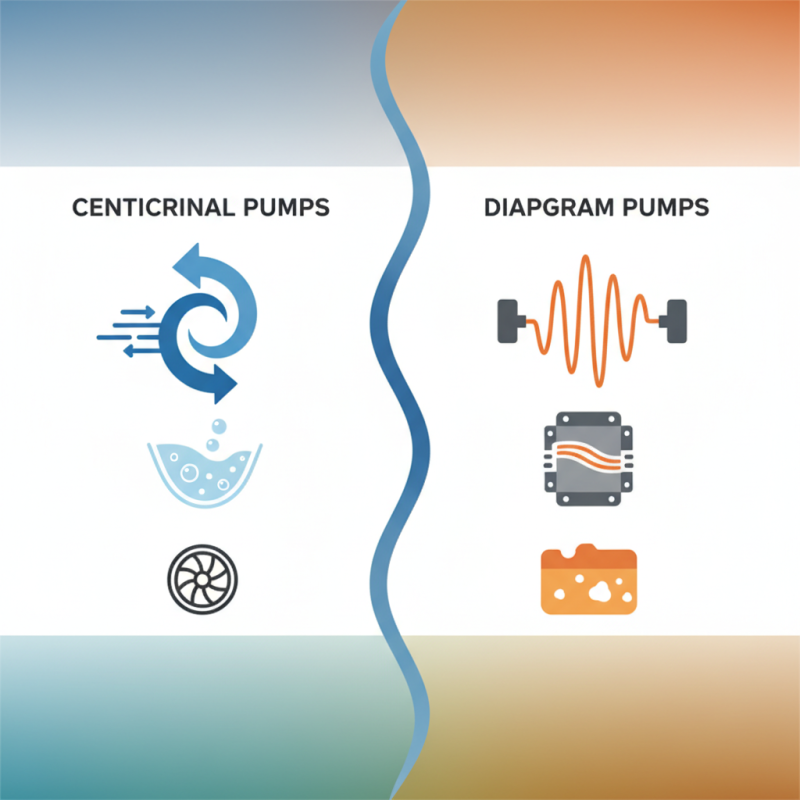
Centrifugal pumps are widely used in various industries. They convert rotational energy into hydraulic energy. This process moves fluids through a system efficiently. According to a report by Allied Market Research, the global centrifugal pump market is projected to reach $43.6 billion by 2026. This indicates strong growth driven by increased demand in sectors like oil and gas.
Key characteristics of centrifugal pumps include their ability to handle large volumes of fluid. They excel in applications requiring continuous flow rates. However, they are not ideal for high-viscosity liquids. According to the Hydraulic Institute, efficiency can vary based on design and operating conditions. Users must consider their specific needs carefully when selecting a pump.
Maintenance can pose challenges. Though generally reliable, centrifugal pumps may require routine checks. Wear and tear on impellers can reduce effectiveness over time. Regular monitoring is essential to maintain performance. Users may encounter issues if pumps are not suited for their application range. Understanding the limitations and capabilities of centrifugal pumps is crucial for optimal system design.
| Feature | Centrifugal Pumps | Diaphragm Pumps |
|---|---|---|
| Flow Rate | High flow rates, typically >100 L/min | Lower flow rates, generally <100 L/min |
| Viscosity Handling | Not ideal for high-viscosity fluids | Suitable for high-viscosity and shear-sensitive fluids |
| Maintenance | Generally lower maintenance | May require more maintenance due to diaphragm wear |
| Pump Type | Rotary pump system | Positive displacement pump |
| Applications | Water supply, cooling systems | Chemical transfer, food processing |
| Efficiency | High efficiency for low viscosity | Less efficient at low flow rates |
| Cost | Generally lower initial cost | Higher initial investment |
Diaphragm pumps are unique devices commonly used in various industries. They utilize a flexible diaphragm to create pressure differences. This design enables them to handle a wide range of fluids, including corrosive and viscous materials. Their ability to operate dry without damage is an essential feature. This makes them reliable in challenging conditions.
One key characteristic of diaphragm pumps is their precise flow control. Users can expect consistent performance, reducing the risk of spillages. They excel in applications that require careful dosing. However, they may not be the best choice for high-volume transfers. Their maintenance needs can also complicate long-term usage. Regular checks are necessary to ensure optimal operation and prevent wear.
In applications where reliability is critical, diaphragm pumps shine. Their self-priming capability allows flexibility in setup. Users appreciate the quiet operation compared to centrifugal pumps. However, the initial investment might be higher. Understanding these aspects is crucial for buyers aiming for efficiency and durability in their processes.
When comparing centrifugal and diaphragm pumps, understanding their performance and efficiency is crucial for buyers. Centrifugal pumps excel in high flow rates and continuous delivery. They utilize rotational energy, making them ideal for liquid transfer in various industries. Their simple design allows for easy maintenance, though they may struggle with viscous fluids or slurries. Users should be aware of cavitation issues that arise when the pressure drops below vapor pressure, leading to pump damage.
On the other hand, diaphragm pumps offer positive displacement, which makes them suitable for handling thick fluids and slurries. They provide a consistent flow, regardless of viscosity. This pump type can run dry without damage, which is a significant advantage in many applications. However, they require more frequent maintenance due to wear and tear on the diaphragm. Users should consider the operational costs associated with their less efficient energy consumption compared to centrifugal pumps.
Deciding between these two pump types involves examining specific needs. Factors like fluid characteristics, flow requirements, and maintenance capabilities all play a role. Buyers should weigh these considerations carefully. The right choice depends on balancing efficiency, operational challenges, and long-term reliability.
Centrifugal and diaphragm pumps serve different needs across various industries. Centrifugal pumps are ideal for low-viscosity fluids. They are often used in water supply, HVAC systems, and chemical processing. Their simple design allows for high flow rates, making them efficient for moving fluids quickly.
In contrast, diaphragm pumps excel in applications that require high pressure and versatility. They can handle slurries, viscous liquids, or even abrasive fluids. This makes them valuable in industries like pharmaceuticals, food processing, and wastewater treatment. Their ability to run dry and self-prime adds to their utility in challenging situations.
Tips for Choosing the Right Pump:
Consider fluid characteristics. If you are moving clean, thin liquids, centrifugal pumps are usually more efficient. On the other hand, for thick, abrasive, or shear-sensitive fluids, diaphragm pumps might be the better choice. Always assess how the pump will fit into your overall system. A poorly chosen pump can lead to increased maintenance and unexpected downtime.
Think about operational efficiency. Centrifugal pumps can wear out quickly if used improperly. Diaphragm pumps, while more durable, may require additional care. Regular maintenance is essential for both types. Poor maintenance can lead to costly repairs or failures. Balancing these factors will help ensure long-lasting performance.
When selecting a pump, it's crucial to understand the differences between centrifugal and diaphragm pumps. Centrifugal pumps excel in moving large volumes of fluid quickly. They rely on rotational energy to create flow, making them ideal for water and similar liquids. In contrast, diaphragm pumps are designed for precise flow control. They use a flexible diaphragm to pump fluids, which is beneficial for handling slurries or corrosive materials.
Tips: Consider your fluid's viscosity. If it’s thicker or contains solids, a diaphragm pump may perform better. Also, think about your operating environment. Diaphragm pumps handle more challenging conditions. Centrifugal pumps might be less reliable in such scenarios.
It's also vital to consider maintenance requirements. Centrifugal pumps generally need regular check-ups to ensure performance. Diaphragm pumps often require less frequent servicing. However, they can face issues like diaphragm wear over time. Always assess your long-term needs. A pump's initial cost is just one part of the equation. Maintenance can significantly impact total expenses.
: Diaphragm pumps are versatile devices used in various industries to handle different types of fluids.
They use a flexible diaphragm to create pressure differences, allowing for precise flow control.
They can run dry without damage, making them reliable under challenging conditions.
No, they are not the best choice for high-volume applications.
They require regular maintenance to prevent wear and ensure optimal operation.
Assess fluid characteristics, flow requirements, and maintenance capabilities to make an informed decision.
Yes, they excel at handling thick fluids and slurries with consistent flow.
Diaphragm wear over time can lead to performance challenges that need attention.
They may have less efficient energy consumption compared to other pump types.
Yes, users often find them quieter, which can be beneficial in many settings.
Centrifugal and diaphragm pumps are two popular types of pumps used in various applications, each with its unique characteristics and advantages. Centrifugal pumps operate using a rotating impeller to move fluids, offering high flow rates and efficient operation for low-viscosity liquids. In contrast, diaphragm pumps utilize a flexible diaphragm to displace fluid, making them ideal for handling viscous, corrosive, or abrasive materials.
When considering "what is the difference between centrifugal and diaphragm pumps," it is essential to evaluate their performance and efficiency in specific applications. Centrifugal pumps excel in scenarios requiring large volumes, while diaphragm pumps provide better suction lift and are suited for transferring chemicals and slurries. Buyers should consider factors such as the intended application, fluid characteristics, and maintenance requirements to select the right pump to meet their needs effectively.

Tongyi Machinery