2026 Top Pump Sizes How Does Pump Size Affect Efficiency?

Time:2026-09-18 Author:Sienna
0%

Choosing a pump by diameter alone can create costly performance problems. A larger casing does not automatically deliver greater efficiency. The real question is: “How does pump size affect its efficiency” under actual operating conditions?

The U.S. Department of Energy reports that pumping systems can represent nearly 20% of industrial electricity consumption. Hydraulic Institute guidance also emphasizes operation near the Best Efficiency Point, or BEP. When a pump is oversized, it may run far left or right of BEP. That increases throttling losses, vibration, seal wear, and energy use. An undersized pump may operate continuously at high speed, causing overheating and unstable flow.

Pump specialist Dr. Lev Nelik captures the practical issue clearly: “The best pump is not the biggest pump; it is the pump that matches the system.” That principle deserves attention in 2026, when energy prices, carbon reporting, and maintenance budgets increasingly influence equipment selection.

Consider a chilled-water pump serving a building with partly closed control valves. Its motor may be rated for 30 kW, yet the system may need only 18 kW. The unused capacity becomes pressure loss and wasted electricity. Small details matter. Pipe diameter, impeller trimming, variable-speed control, fluid viscosity, and daily demand can change the result.

The answer is not perfectly tidy. A smaller pump is not always better. Engineers must compare the system curve, duty point, efficiency curve, NPSH margin, and lifecycle cost. This guide examines leading pump sizes for 2026 and explains how correct sizing can improve efficiency without sacrificing reliability.
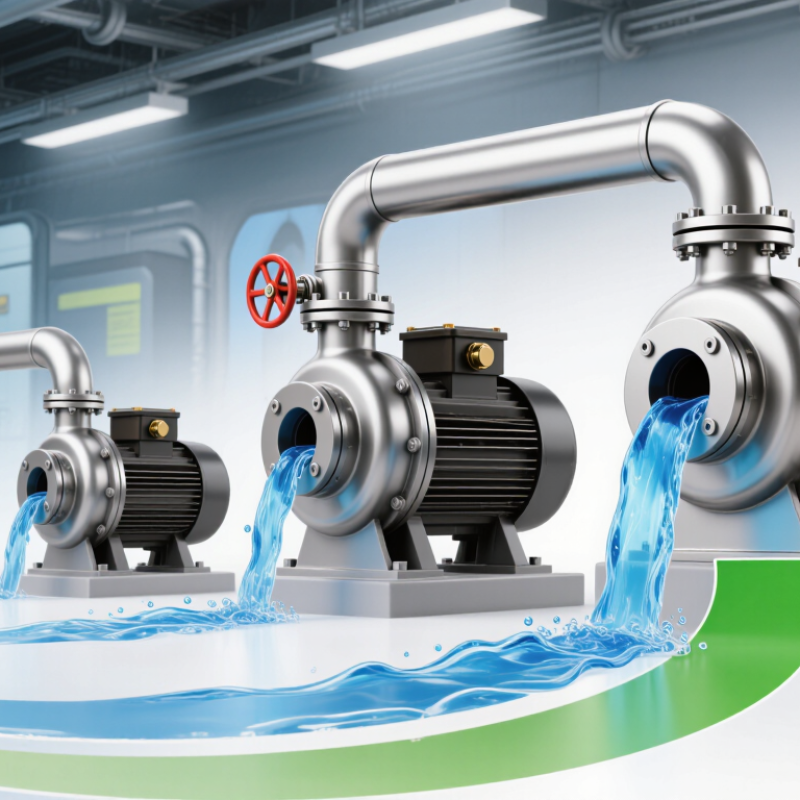
2026 Top Pump Sizes How Does Pump Size Affect Efficiency?

What Pump Size Means and Why It Matters for System Performance

2026 Top Pump Sizes: How Does Pump Size Affect Efficiency?

Pump size means more than outlet diameter. It usually describes rated flow, head, motor capacity, and hydraulic geometry. Flow is the liquid volume moved over time. Head is the energy needed to overcome elevation, pipe friction, valves, and pressure requirements. A larger casing does not automatically deliver better performance.

Efficiency depends on matching the pump to the system curve. A properly selected pump operates near its best efficiency point. Useful hydraulic output then requires less electrical input. An oversized pump may push excessive flow, waste energy through throttled valves, and create vibration. An undersized pump can run continuously, overheat, or miss the required pressure. Small details matter. A 40-meter pipe run, tight elbows, or a dirty filter can shift the real duty point.

In practice, I would record flow, suction conditions, discharge pressure, fluid temperature, and operating hours before choosing a size. I would compare those readings with design calculations after installation. Calculations help, but field conditions are rarely perfect. It is messy. Sometimes the “right” pump looks slightly conservative. That deserves a second check, rather than automatic approval.

How Flow Rate and Pressure Determine the Right Pump Size

Pump size is determined by more than inlet and outlet diameter. The key values are required flow rate and total pressure, or total dynamic head. Flow rate describes how much liquid must move within a specific time. Pressure describes the resistance the pump must overcome.

Measure it. Do not guess.

A practical sizing check includes static lift, pipe length, pipe diameter, bends, valves, filters, and fluid viscosity. For example, moving 40 cubic meters per hour through a long, narrow pipeline may require more head than moving 60 cubic meters through a short, wide line. The pump must operate near the intersection of the system curve and its performance curve. That point matters more than the maximum advertised capacity.

Oversizing can waste energy. Operators may throttle the discharge valve, creating unnecessary pressure and heat. Undersizing may produce weak flow, unstable operation, or motor overload. A pump with adequate pressure can still fail if its available NPSH is insufficient. Check suction conditions, liquid temperature, and vapor pressure before approving the selection.

In field inspections, measured flow often differs from the design estimate. A neat calculation can still be wrong. Temporary gauges, flow meters, and operating records reveal those gaps. Recheck the duty point after installation, especially when piping changes. Efficiency also depends on keeping the pump close to its best efficiency point, not merely choosing the largest available size.

2026 Top Pump Sizes: How Does Pump Size Affect Efficiency? — How Flow Rate and Pressure Determine the Right Pump Size
Core sizing relationship: Total Dynamic Head (TDH) = static lift + friction losses + required outlet pressure head. For water, hydraulic power is approximately Phyd (kW) = 0.002725 × Q (m³/h) × H (m). Shaft power increases as flow rate or pressure head increases and is calculated by dividing hydraulic power by pump efficiency.
Approximate Flow Capacity by Nominal Pump Discharge Size
Nominal Discharge Size Approximate Internal Diameter Basis Recommended Liquid Velocity Range Approximate Flow Range at 1–3 m/s Typical Application Scale Efficiency and Sizing Consideration
25 mm (1 in) 25 mm 1–3 m/s 1.8–5.3 m³/h Small water transfer, dosing support, light-duty circulation Best suited to low flow. Oversizing may cause throttling, noise, and operation away from the best-efficiency point.
40 mm (1.5 in) 40 mm 1–3 m/s 4.5–13.6 m³/h Small buildings, irrigation zones, process circulation Suitable when the required flow is moderate and the system head is not excessive.
50 mm (2 in) 50 mm 1–3 m/s 7.1–21.2 m³/h Residential and commercial water transfer, medium irrigation A common general-purpose size. Actual pump selection must still match TDH and the system curve.
80 mm (3 in) 80 mm 1–3 m/s 18.1–54.3 m³/h Large irrigation zones, HVAC circulation, light industrial service Larger piping can reduce friction loss, which may lower the required pump head and operating cost.
100 mm (4 in) 100 mm 1–3 m/s 28.3–84.8 m³/h Commercial water systems, larger cooling loops, agricultural transfer Often beneficial for high-flow systems because lower velocity reduces friction and may improve whole-system efficiency.
150 mm (6 in) 150 mm 1–3 m/s 63.6–190.8 m³/h Municipal, industrial, flood-control, and large agricultural systems Requires careful review of operating range, impeller diameter, motor power, NPSH available, and transient conditions.
Illustrative Pump Duty Points: Effect of Flow Rate and Pressure Head
Required Flow Total Dynamic Head Equivalent Pressure Increase for Water Representative Pump Efficiency Estimated Hydraulic Power Estimated Shaft Power Typical Motor Rating Selection Interpretation
2 m³/h 25 m 2.45 bar 45% 0.14 kW 0.30 kW 0.55 kW Low-flow duty. A compact pump may be suitable, but minimum-flow requirements should be checked.
10 m³/h 35 m 3.43 bar 60% 0.95 kW 1.59 kW 2.2 kW Moderate flow and head. Selecting a pump near its best-efficiency point can reduce energy consumption.
20 m³/h 40 m 3.92 bar 68% 2.18 kW 3.21 kW 4.0 kW Increasing either flow or head raises power demand. A safety margin is normally required for motor selection.
50 m³/h 45 m 4.41 bar 72% 6.13 kW 8.52 kW 11 kW High-flow duty. Pipe friction, suction conditions, and control-valve losses can strongly affect the final pump size.
100 m³/h 50 m 4.90 bar 76% 13.63 kW 17.93 kW 22 kW Large-duty selection. The pump should be checked against the complete system curve rather than rated flow alone.
150 m³/h 60 m 5.88 bar 78% 24.53 kW 31.45 kW 37 kW Very high flow and pressure demand. Parallel pumps or variable-speed control may improve flexibility and part-load efficiency.
Key Factors That Determine the Correct Pump Size
Design Dimension What It Measures Effect on Pump Selection Practical Check
Flow rate, Q Required liquid volume per unit of time Determines the pump capacity and the appropriate impeller or pump casing range. Use the highest normal operating flow, not an unrealistic maximum, unless peak demand is continuous.
Total Dynamic Head, TDH Static elevation, pipe friction, fittings, valves, and required discharge pressure Determines the pressure capability and operating point on the pump curve. Calculate losses at the design flow and include all system components.
Best-Efficiency Point, BEP Region where the pump converts input power into hydraulic output most efficiently Operating far left or right of BEP can increase vibration, recirculation, wear, and energy use. Choose a pump whose normal duty point is reasonably close to the manufacturer’s published BEP region.
Net Positive Suction Head, NPSH Available suction pressure margin above the liquid vapor-pressure requirement Insufficient NPSH can cause cavitation, noise, vibration, and damage. Confirm NPSH available exceeds NPSH required with an appropriate operating margin.
Fluid properties Temperature, viscosity, density, solids content, and corrosiveness Can change pump performance, material requirements, motor load, and allowable speed. Do not size a pump using water data when the pumped liquid has significantly different properties.
Operating range Minimum, normal, and maximum flow and head conditions Determines whether one pump, variable-speed control, or multiple pumps in parallel is most efficient. Check the complete operating envelope instead of selecting only one nominal point.
Engineering note: The flow ranges in the first table are approximate hydraulic guidance based on a 1–3 m/s liquid velocity and should not be treated as universal pump capacities. Actual selection requires the pump performance curve, system curve, fluid properties, NPSH analysis, motor service conditions, and applicable local design requirements. Pressure conversion for clean water is approximately 1 bar = 10.2 m of water head.

How Oversized and Undersized Pumps Affect Energy Efficiency

Pump size directly affects energy efficiency, especially in systems running for thousands of hours. An oversized pump can deliver more flow and pressure than the piping requires. This creates throttling losses. The motor still consumes substantial power, even when a valve restricts flow. In a working plant, I have seen pressure rise while useful output barely changed. That mismatch deserves attention.

An undersized pump creates a different problem. It may run near its limit, fail to meet demand, or operate far from its best efficiency point. Operators often compensate by extending runtime or adding another pump. Energy use then rises quietly. Heat, vibration, and unstable flow can also appear. Small pump, big consequences. Yet sizing only from peak demand can be misleading. Peak conditions may last ten minutes, while normal demand lasts ten hours. A measured flow profile is more reliable than a guess.

A practical review compares required flow, total head, duty cycles, and motor loading. Use field measurements where possible, including suction pressure, discharge pressure, flow, and electrical input. A variable-speed drive may reduce waste, but it cannot rescue a fundamentally unsuitable pump. The best size is not always the smallest one. It must meet real demand without constant throttling or overload. Engineers should also check impeller trim, pipe friction, and future capacity. My own preference is to challenge the first calculation. Assumptions can look precise and still be wrong.

2026 Top Pump Sizes: How Pump Size Affects Efficiency

Centrifugal pumps are generally most efficient near their Best Efficiency Point (BEP). An oversized pump often operates at low flow and loses efficiency, while an undersized pump may operate beyond its BEP and require more energy per unit of hydraulic output. The energy-use index is normalized to 1.00 at the correctly sized operating point.

Representative operating values for a centrifugal pump: actual performance varies with pump design, fluid properties, system head, control method, and operating conditions.

How Pump Speed, Impeller Diameter, and Motor Power Influence Efficiency

2026 Top Pump Sizes: How Does Pump Size Affect Efficiency?

Pump speed often controls efficiency more strongly than pump size alone. The affinity laws show that flow changes with speed, head changes with speed squared, and power changes with speed cubed. A 20% speed reduction can therefore cut theoretical power demand by nearly 49%. This relationship appears in the U.S. Department of Energy’s Improving Pumping System Performance: A Sourcebook for Industry. It sounds simple. Real systems are less obedient. Static lift, pipe friction, and control-valve losses can reduce the expected savings. A site measurement is still necessary.

Impeller diameter also changes head and power. A smaller impeller may match the duty point better, but excessive trimming can move operation outside the pump’s best efficiency range. Motor power must provide enough reserve without becoming unnecessarily oversized. The DOE Pumping System Assessment Tool guidance encourages comparing actual operating points with system demand, rather than selecting from motor ratings alone. Field audits often find pumps running far from their design point. That is expensive. A practical check records flow, discharge pressure, suction pressure, speed, and input power during normal production. Engineers should question calculated savings, especially when measurements are incomplete. Efficiency is not a label. It is a measured operating condition.

How to Select the Most Efficient Pump Size for Different Applications

How to Select the Most Efficient Pump Size for Different Applications

Pump size should follow the duty point, not the pipe diameter alone. Define required flow, total dynamic head, fluid temperature, viscosity, and operating hours.

A pump that is too large may run far from its best efficiency point. This creates throttling losses, vibration, and unnecessary electricity use. An undersized pump may struggle to maintain pressure. That can cause overheating and early component wear.

The European Commission’s 2019 preparatory study estimated that pumps consume about 22% of global motor electricity. Correct sizing therefore has measurable value.

The U.S. Department of Energy’s Pumping System Assessment Tool also evaluates efficiency through flow, head, power, and operating conditions. Compare several pump curves, then select a model whose normal duty point stays close to its best efficiency point. For variable demand, a variable-speed drive can reduce flow without forcing a valve to waste energy. However, it is not automatically efficient. Poor control settings can erase the benefit.

Field experience shows that real systems rarely match design drawings perfectly. Fouled filters, aging pipes, and changing production loads alter the duty point. Leave a practical operating margin, but avoid excessive oversizing.

A 10% cushion may be reasonable in some systems, yet it should be verified with measured data. Measure flow and pressure after installation. Then check motor input power.

The first selection may be wrong. That is worth admitting.

FAQS

What does pump size actually describe?

Pump size includes rated flow, total head, motor capacity, and hydraulic geometry. It is not just outlet diameter. A larger casing does not guarantee better performance.

How does pump size affect efficiency?

Efficiency improves when the pump matches the system curve. Near its best efficiency point, it needs less electrical input. Poor matching creates wasted energy and unstable operation.

What happens when a pump is oversized?

An oversized pump may produce excessive flow and pressure. Operators often restrict flow with a throttled valve. The motor still consumes substantial power. Useful output may barely improve.

What problems can an undersized pump cause?

An undersized pump may miss the required pressure or flow. It can run continuously and approach its operating limit. Heat, vibration, and unstable flow may follow. Small pump, big consequences.

Which measurements should be collected before selecting a pump?

Record flow, suction pressure, discharge pressure, fluid temperature, and operating hours. Also inspect pipe length, elbows, valves, and filter condition. A 40-meter pipe run can change the real duty point. Field data matters more than assumptions.

Should pump sizing focus only on peak demand?

Not always. Peak demand may last ten minutes, while normal demand lasts ten hours. A measured flow profile gives a clearer sizing basis. Peak-only sizing can create unnecessary energy use. That assumption deserves review.

Can a variable-speed drive fix a poorly selected pump?

A variable-speed drive may reduce waste during changing demand. It cannot rescue a fundamentally unsuitable pump. The pump must still meet real flow and head requirements. Controls are helpful, not magical.

How should pump selection be checked after installation?

Compare measured flow, pressures, motor loading, and electrical input with design calculations. Check whether the pump operates near its best efficiency point. Real conditions are rarely perfect. I would challenge the first calculation, even when it looks precise.

Conclusion

Pump size is a key factor in system performance because it determines how effectively the pump can deliver the required flow rate and pressure. Choosing the right size helps maintain stable operation, reduce energy consumption, and prevent unnecessary stress on pipes and equipment. How does pump size affect its efficiency? A properly matched pump usually operates closer to its best efficiency point, while an oversized pump may waste energy through excessive flow, throttling, and frequent cycling. An undersized pump may struggle to meet demand, operate continuously, and experience increased wear.

Efficiency also depends on pump speed, impeller diameter, and motor power. These factors should be evaluated together with the system’s operating conditions rather than considered separately. For residential water supply, irrigation, heating, industrial circulation, and other applications, the most efficient choice is the smallest pump that can reliably meet the required flow and pressure under normal and peak conditions. Accurate system calculations and suitable control methods can further improve performance and reduce long-term operating costs.

Sienna

Sienna

Sienna is a skilled marketing professional with a deep expertise in our company’s core products and services. With a passion for innovation and detail, she plays a pivotal role in crafting insightful blog posts that not only highlight the unique features of our offerings but also provide valuable......