How to Choose Between a Vacuum Pump and an Air Compressor?

Time:2026-05-16 Author:Madeline
0%

When exploring the question of how to choose between a vacuum pump and an air compressor, it's vital to consider your specific needs. Both tools have unique applications. Their functionalities can greatly impact efficiency in various settings.

A vacuum pump is designed to remove gas molecules from a sealed volume. It's often used in laboratories, manufacturing, and HVAC systems. On the other hand, an air compressor supplies compressed air for powering tools, inflating tires, and more. Understanding your demands is crucial.

Selecting the right equipment can seem daunting. Reflecting on your project's requirements will guide your choice. Evaluating parameters like pressure, volume, and energy efficiency is essential. This decision may initially feel overwhelming, but a thoughtful approach can lead to better outcomes.
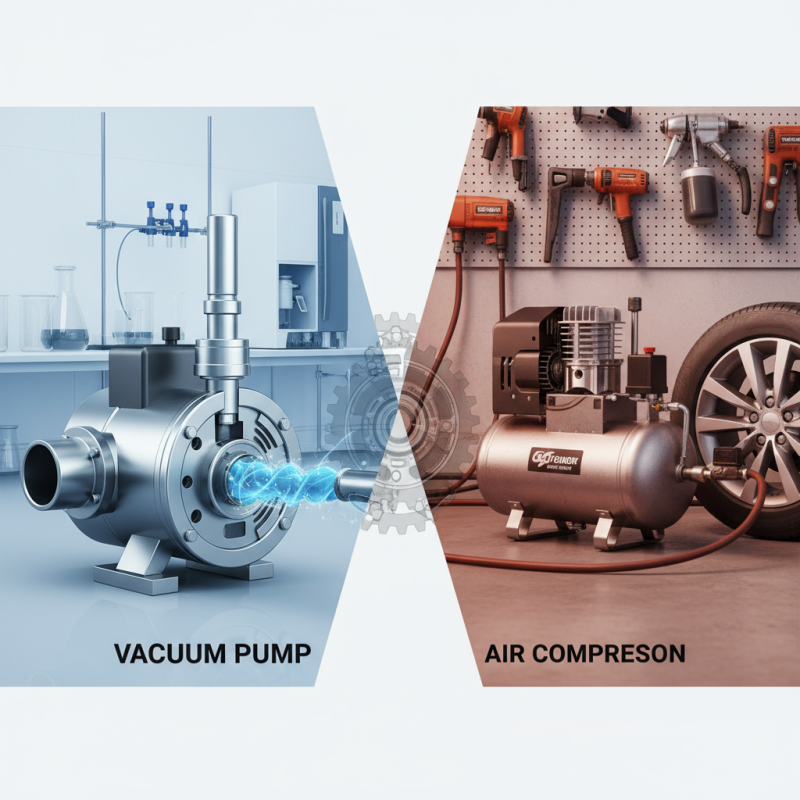
How to Choose Between a Vacuum Pump and an Air Compressor?

Understanding the Basic Functions of Vacuum Pumps and Air Compressors

When considering a vacuum pump and an air compressor, it's important to grasp their basic functions. Vacuum pumps are designed to create a vacuum by removing air or gas from a chamber. They hold essential roles in various industries, including pharmaceuticals and food packaging. By understanding how vacuum pumps work, one can appreciate their ability to maintain pressure differentials and their impact on product quality.

Air compressors, on the other hand, store and release compressed air. They are pervasive in manufacturing, automotive, and construction sectors. Their functionality allows them to power tools, inflate tires, and even assist in painting processes. Compressors generate pressurized air, which can be versatile but may require careful handling. The selection between them sometimes seems tricky; knowing these fundamental functions helps clarify your choice.

One must also reflect on the operational needs. While vacuum pumps can achieve absolute evacuations, air compressors are better for tasks requiring a steady supply of air. Each has distinct advantages and potential drawbacks. Understanding these characteristics empowers users to make informed decisions that align with their specific applications. A thoughtful approach can lead to optimal performance and successful outcomes.

Comparison of Vacuum Pumps and Air Compressors

This bar chart compares the typical applications of vacuum pumps and air compressors. The data shows the number of significant applications for each device, with air compressors having a wider variety of uses than vacuum pumps.

Key Differences in Applications: When to Use Each Tool

When choosing between a vacuum pump and an air compressor, understanding their applications is crucial. Vacuum pumps are commonly used in industries requiring low-pressure environments. For instance, they are essential in semiconductor manufacturing, which according to industry data, utilizes vacuum technology in about 70% of production processes. This tool effectively removes air and gases, creating the necessary vacuum conditions for efficient operations.

On the other hand, air compressors are often preferred in pneumatic applications. They are vital in powering tools such as nail guns, paint sprayers, and air wrenches. In fact, a recent report highlighted that air compressors are used in 60% of manufacturing facilities due to their versatility. However, relying solely on one tool can be limiting. Using air compressors in situations requiring a vacuum can lead to inefficiencies.

Both tools have specific strengths and weaknesses. Vacuum pumps can struggle in high humidity environments, while air compressors may not achieve the same low pressures vacuum pumps can deliver. Understanding these nuances can inform better decisions in tool selection, ultimately optimizing operational efficiency.

Evaluating Your Specific Needs: Factors to Consider

When deciding between a vacuum pump and an air compressor, it's crucial to evaluate your specific needs. Both tools have unique functions and applications. For instance, vacuum pumps are ideal for removing air and moisture, often used in refrigeration or the medical field. Reports show that the vacuum pump market is projected to reach USD 4.7 billion by 2027, indicating strong demand in sectors such as pharmaceuticals and automotive.

On the other hand, air compressors provide compressed air for tools and machinery. They are commonly seen in manufacturing and construction. In fact, the global air compressor market size was valued at approximately USD 30 billion in 2020, with expectations of consistent growth. Users must consider the power requirements, efficiency, and the intended use of each device. A wrong choice can lead to inefficiencies and increased operational costs.

Think about the specific application you have in mind. Are you primarily focused on a task that requires a vacuum? Or do your needs lean more towards pneumatic tools? The nuances in performance, such as pressure and airflow rates, are vital to achieve your goals. Evaluate your environment and the tools required, as the choice could significantly impact productivity.

Energy Efficiency: Comparing Power Consumption of Both Devices

When considering energy efficiency, vacuum pumps and air compressors serve different roles in industrial applications. Vacuum pumps are designed to remove gas molecules from a sealed volume. This process usually requires less energy than compressing air. In contrast, air compressors draw in air and compress it, which typically demands more power. Users should assess their specific needs before making a decision.

The actual power consumption varies significantly based on the device. For instance, vacuum pumps can operate effectively at lower power levels, ideal for tasks requiring a consistent vacuum. Air compressors, on the other hand, can surge in energy use depending on the compression ratio. It’s crucial to examine the duty cycle as well. Prolonged use of either device impacts overall energy costs significantly.

Another aspect to consider is maintenance and operational efficiency. Sustaining either device requires diligence. Vacuum pumps may need routine checks to prevent leaks. Air compressors also require regular filtration checks. Inefficient maintenance can lead to increased energy consumption and costs. Users must reflect on their maintenance habits to ensure optimal performance from their chosen device.

Maintenance Requirements and Longevity of Vacuum Pumps vs. Air Compressors

When considering maintenance requirements, vacuum pumps and air compressors exhibit distinct differences. Vacuum pumps often require regular oil changes and periodic seal replacements. According to industry reports, nearly 30% of vacuum pump failures stem from inadequate lubrication. This emphasizes the importance of consistent maintenance to ensure optimal performance. Conversely, air compressors typically face challenges related to air filters and water condensation. Over time, neglecting these issues can lead to efficiency drops.

**Tip:** Schedule routine check-ups for your equipment to avoid unexpected failures. Keeping a maintenance log can help you track when parts need attention.

Longevity is another crucial factor. Vacuum pumps can last more than 10 years with proper care. Comparatively, air compressors may have a lifespan of 5 to 15 years, influencing choices based on usage. A study revealed that about 40% of users experience early compressor failure due to poor maintenance practices.

**Tip:** Invest in quality components. Using high-grade filters and lubricants can extend equipment life significantly.

By weighing maintenance and longevity alongside your operational needs, you can make an educated decision between a vacuum pump and an air compressor.

How to Choose Between a Vacuum Pump and an Air Compressor? - Maintenance Requirements and Longevity of Vacuum Pumps vs. Air Compressors

Parameter Vacuum Pump Air Compressor
Maintenance Frequency Every 6-12 months Every 3-6 months
Typical Lifespan 5-10 years 10-15 years
Common Issues Oil leakage, seal wear Air leaks, overheating
Required Oil Yes, often required Not always (depends on type)
Ease of Repair Moderate to Difficult Generally Easy
Power Consumption Lower Higher

FAQS

: When should I use a vacuum pump?

: Use a vacuum pump in low-pressure environments, such as semiconductor manufacturing.

What are the primary uses for air compressors?

Air compressors power pneumatic tools like nail guns and paint sprayers in various industries.

Can I use an air compressor where a vacuum is needed?

No. Air compressors may lead to inefficiencies in vacuum-required situations.

What are common maintenance tasks for vacuum pumps?

Regular oil changes and seals replacements are essential for vacuum pump maintenance.

Why do vacuum pumps fail often?

About 30% fail due to inadequate lubrication, stressing the need for consistent care.

What maintenance issues do air compressors face?

They often deal with air filter clogs and water condensation problems.

How long can vacuum pumps last?

With proper maintenance, vacuum pumps can exceed 10 years of service.

What is the lifespan of air compressors?

Air compressors typically last between 5 to 15 years depending on usage and care.

What can extend the life of air compressors?

Using high-quality filters and lubricants can greatly improve longevity.

What is a common mistake with air compressor maintenance?

Neglecting air filters often leads to efficiency drops and early failures.

Conclusion

When considering how to choose between a vacuum pump and an air compressor, it is essential to first understand the core functions of each device. Vacuum pumps are designed to remove gas molecules from a sealed volume, creating a vacuum, while air compressors focus on compressing air to increase its pressure for various applications. The choice between the two largely depends on the specific needs of your project, such as the required pressure levels and the substance being handled.

Additionally, evaluating energy efficiency and maintenance requirements is crucial. Vacuum pumps typically consume less energy for certain applications, while air compressors may require more extensive maintenance due to their mechanical complexity. Understanding these key differences, along with your unique operational needs, will guide you in making an informed decision on which tool to utilize for optimal performance.

Madeline

Madeline

Madeline is a dedicated marketing professional with a wealth of expertise in our company's core offerings. With a keen understanding of the industry, she brings a unique perspective to her role, consistently delivering high-quality content that highlights the superior aspects of our products. As......